Clare Black and White Prints
Clare Black and White Prints
by Jacqueline LaRocca
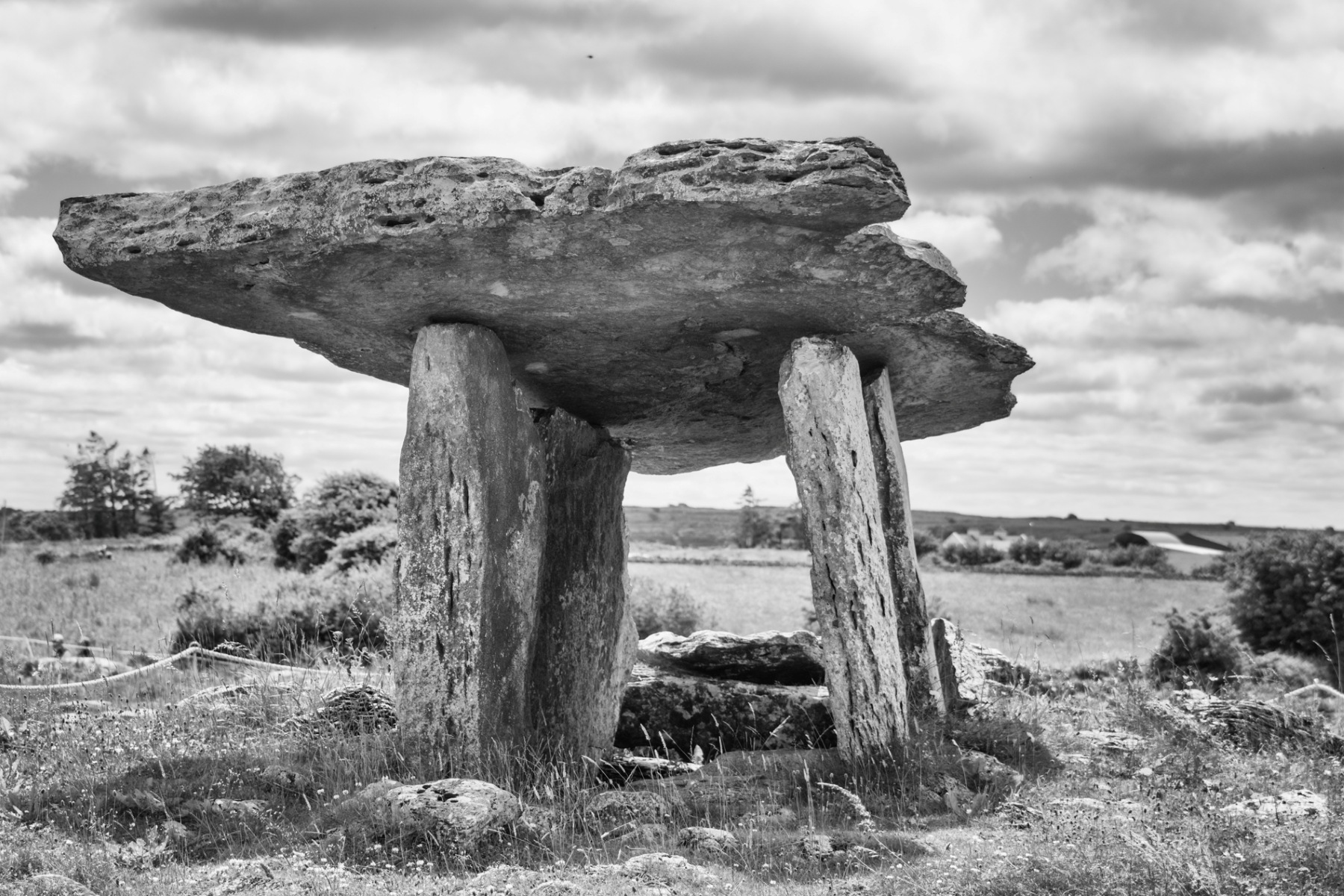
This fine art photograph captures a prehistoric dolmen standing in an open field beneath a textured sky. The massive capstone rests on upright stones, revealing ancient engineering.
Monochrome tones emphasize the monument’s age, texture, and cultural significance.
This artwork stands out for its powerful connection to Ireland’s ancient past.
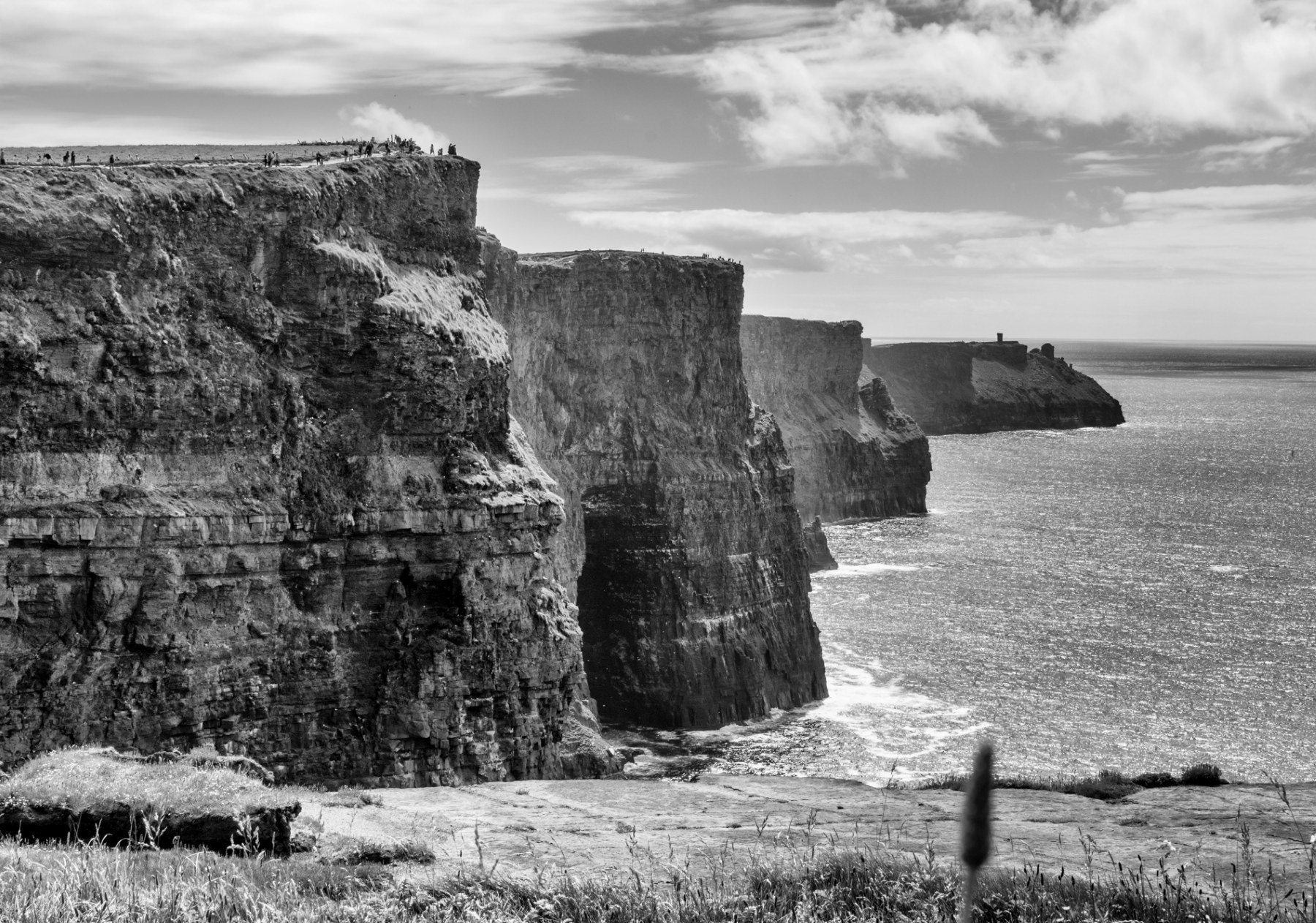
This photograph captures the dramatic cliffs rising above the Atlantic Ocean, with layered rock formations and sweeping views.
Rendered in fine art style, the image emphasizes scale, texture, and the rugged beauty of Ireland’s coastline.
This artwork stands out for its breathtaking perspective and natural grandeur.

This photograph captures cows grazing across a sloping field surrounded by dense vegetation.
Rendered in black and white, the image highlights pastoral calm and the natural rhythm of rural Ireland.
This artwork stands out for its peaceful composition and countryside charm.
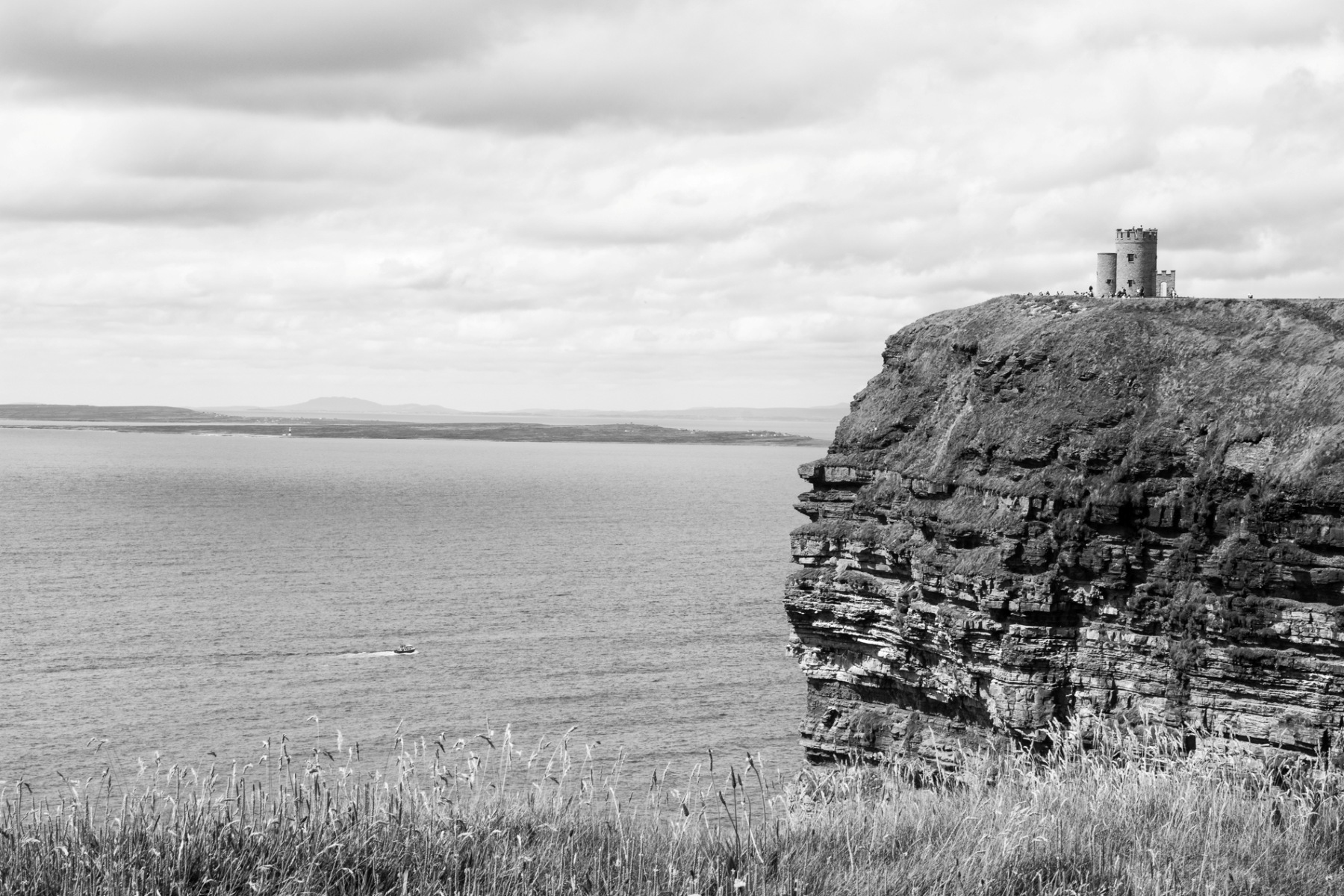
This fine art photograph features a rugged cliff rising above the sea, crowned by a small stone tower. The calm water and distant land create a sweeping coastal view.
Monochrome tones highlight the dramatic contrast between rock, sea, and sky.
This artwork stands out for its powerful composition and iconic Irish coastline.
History
Location
County Clare, nestled on Ireland’s rugged west coast, captures the imagination that depict its history steeped in resilience, tradition, and cultural vibrancy. It began in prehistory. Early inhabitants raised monuments like Poulnabrone dolmen, which still stands in the stark beauty of the Burren. These people left behind tombs, stone tools, and evidence of thriving pastoral life.
Celtic groups and missionaries
As centuries passed, Celtic groups moved into Clare. They brought language, order, and hillforts like Mooghaun. By the fifth century, Christian missionaries arrived. They established monasteries at Kilfenora and Scattery Island, spreading faith across the land. These monastic sites became spiritual and educational centers, anchoring early communities.
Vikings
Then came the Vikings in the ninth century. Though they raided coastal settlements, they also helped develop trade. Gaelic clans, especially the powerful O’Briens, rose to prominence. From their seat at Killaloe, the O’Briens ruled Munster and briefly all of Ireland. Brian Boru, Ireland’s high king, hailed from this line.
Norman Invasion
After the Norman invasion in the late twelfth century, Norman lords gained territory. However, Gaelic culture endured. Castles appeared across the county, but native resistance remained strong. By the late Middle Ages, Clare retained a unique Gaelic identity, shaped by clan loyalty and bardic tradition.
English Rule
During the sixteenth and seventeenth centuries, English rule expanded. The Tudor conquest imposed new laws, land seizures, and religious pressure. Clare resisted fiercely, especially during the Confederate Wars and Cromwell’s invasion. These conflicts devastated the region, causing displacement and hardship.
Eighteenth Century
Nonetheless, Clare rebuilt itself. By the eighteenth century, Ennis emerged as a political and commercial hub. Although Penal Laws restricted Catholics, local leaders worked to preserve Irish culture and rights. Daniel O’Connell, the “Liberator,” even represented Clare in Parliament after the landmark 1828 election.
Great Famine
Then came the Great Famine. It struck Clare hard in the 1840s. Starvation, disease, and emigration ravaged its people. Rural communities like Kilrush and Corofin suffered immense loss. Despite this, traditions survived. Music, dance, and oral history endured, especially in western districts like Doolin.
Twentieth Century
In the early twentieth century, Clare supported Ireland’s fight for independence. Volunteers organized ambushes and raids. Later, the county embraced the Free State while preserving its distinctive heritage. Since then, Clare has thrived as a center of music, heritage, and coastal beauty.
Today
Today, visitors explore the Cliffs of Moher, Ennis’s lively streets, and the Burren’s ancient silence. Through hardship and triumph, Clare has retained its soul. Its story remains etched in stone, song, and the enduring spirit of its people.
Geography
Certainly, let’s continue. To the southeast, you’ll find the River Shannon, Ireland’s longest river. Further south, the Shannon Estuary is present. These bodies of water play a significant role in defining Clare’s physical boundaries.
Interestingly, the county is not isolated. It shares borders with three other counties. To the south, you’ll find County Limerick, and to the east, County Tipperary. Lastly, to the north, it borders County Galway.
Lastly, the county seat of Clare is Ennis, which also happens to be its largest settlement. This gives you a glimpse into the geographical layout of County Clare. Fascinating, isn’t it?
Culture
Finally, let’s explore the rich culture of County Clare. The county is renowned for its cultural heritage, which includes traditional music, Gaelic games, and a vibrant folk heritage.
The pubs of Miltown Malbay and Doolin are famous for their music sessions. Additionally, the county is home to the Burren and Cliffs of Moher Geopark, which is part of the Wild Atlantic Way.
The Burren, in particular, transforms into a unique rock garden in the spring. Also, millions of wildflowers bursting up through the clints and grykes.
Music in County Clare
County Clare pulses with the rhythm of traditional Irish music, filling pubs, festivals, and homes with lively melodies. Musicians gather in intimate sessions, blending fiddles, flutes, and bodhráns into a seamless flow of sound. The county’s deep-rooted musical heritage thrives in places like Doolin, where nightly performances transform simple gatherings into unforgettable experiences.
Throughout the year, Clare hosts renowned festivals, including the Willie Clancy Summer School, which draws musicians and enthusiasts from around the world. As summer unfolds, the streets of Miltown Malbay echo with the sounds of uilleann pipes and concertinas, creating an atmosphere of pure celebration. Meanwhile, Kilfenora, home to the legendary Kilfenora Céilí Band, keeps the tradition alive with spirited céilí dances that invite everyone to join in.
Beyond the festivals, music spills into everyday life. In Ennis, pubs like Brogan’s Bar and Pepper’s in Feakle welcome both seasoned performers and spontaneous newcomers, ensuring that the tradition remains vibrant. Whether planned or impromptu, these sessions foster a sense of community, where stories unfold through song and generations connect through melody.
County Clare’s music isn’t just about performance—it’s about legacy. Each tune carries the weight of history, passed down through families and refined over centuries. Also, as musicians tap their feet and bow their strings, they weave a tapestry of sound that defines Clare’s cultural heartbeat.
If you like Clare Black and White Prints, you may also like
Showing all 3 results
-
Ireland Black and White Prints
$350.00 (price_excluding_tax) Select options This product has multiple variants. The options may be chosen on the product page -
Ireland BW Canvas Prints
$229.00 (price_excluding_tax) Select options This product has multiple variants. The options may be chosen on the product page -

Ireland BW Framed Prints
$550.00 (price_excluding_tax) Select options This product has multiple variants. The options may be chosen on the product page


Showing all 3 results