Galway Black and White Prints
Galway Black and White Prints
by Jacqueline LaRocca

This fine art photograph captures a tranquil Irish river bordered by luminous foliage and a historic stone tower rising behind the trees. A large rock rests in the still water, anchoring the serene composition.
Rendered in monochrome with an infrared glow, the image highlights the contrast between dark water, bright vegetation, and the weathered stone structure.
This artwork stands out for its peaceful blend of Irish nature and architectural history.
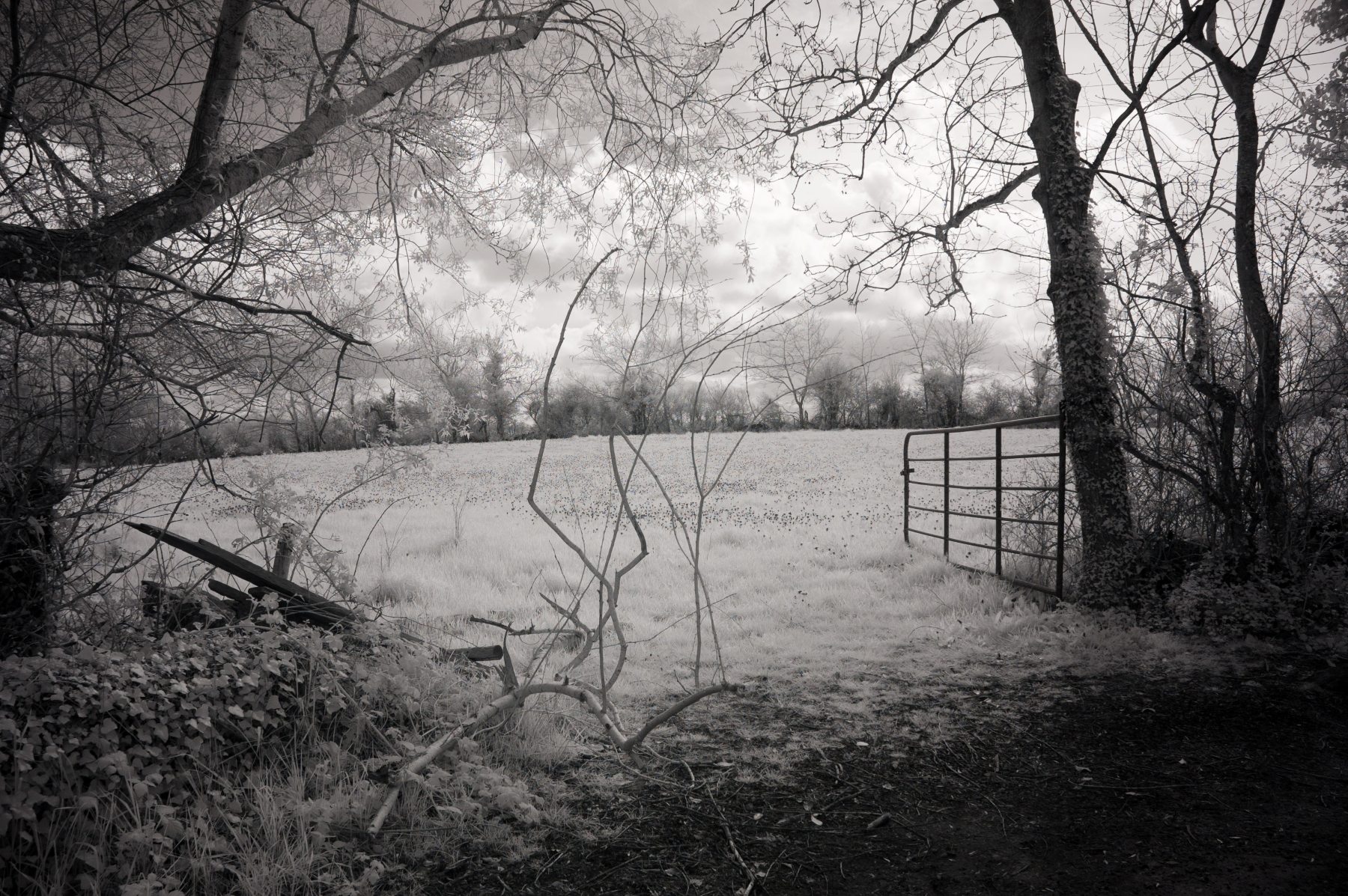
This fine art photograph captures a bright, glowing field framed by bare trees and an open metal gate. Infrared tones transform the landscape into a surreal, luminous scene.
The contrast between dark branches and bright grass creates a dreamlike atmosphere.
This artwork stands out for its ethereal interpretation of rural Ireland.

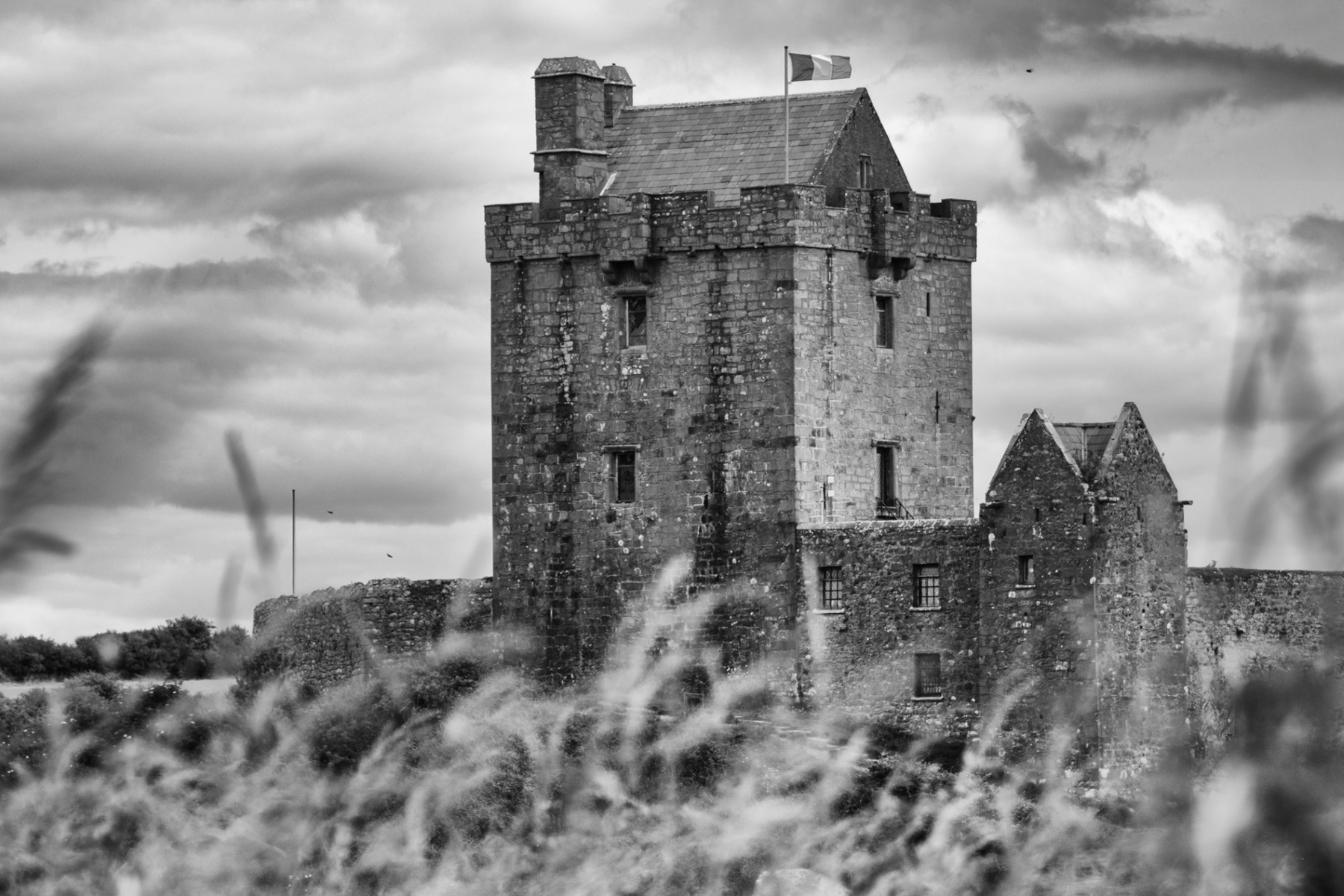
This photograph captures a serene Irish valley with a historic stone tower nestled among trees. Rolling hills rise behind the structure, creating a layered, peaceful landscape.
Monochrome tones highlight texture, depth, and the timeless presence of ancient architecture.
This artwork stands out for its blend of natural beauty and historic charm.

This photograph captures a long stone wall with three iron‑barred gates framed by dense vegetation. Infrared tones give the foliage a bright, surreal glow.
The contrast between stone, metal, and luminous plants creates a striking visual effect.
This artwork stands out for its ethereal interpretation of rural Irish architecture.
History
County Galway, nestled along Ireland’s west coast, holds a storied past shaped by conquest, culture, and resilience. Galway Black and White Photos can capture the essence of its rich history. Its human history begins in the Neolithic period. Also, early settlers built tombs and forts, leaving behind Poulnabrone-like dolmens and impressive stone enclosures. Additionally, these structures reveal a strong, organized farming society.
Iron Age
During the Iron Age, Celtic groups dominated the region. Additionally, they introduced new languages, customs, and also hierarchical leadership. Hillforts and crannógs dotted the landscape, reflecting both defense and prestige. Christianity reached Galway in the fifth century. Additionally, monasteries like Clonfert became spiritual centers, preserving learning and faith during turbulent times.
Viking Raids
Viking raids disrupted the coast in the ninth century. While the Norse never fully settled, they spurred trade and coastal awareness. Later, the O’Flaherty and O’Kelly clans emerged as dominant Gaelic powers. They controlled land fiercely, maintaining independence despite rising external threats.
Anglo-Norman Invasion
The Anglo-Norman invasion reached Galway in the twelfth century. Also, Norman lords built castles and imposed feudal structures. Yet, Gaelic resilience persisted west of the River Corrib. Eventually, Galway City grew into a walled trading hub, led by the “Families of Galway”—fourteen merchant families. They forged commercial ties with Spain, France, and Portugal.
Tudor Rule and Cromwell
Tudor rule in the sixteenth century challenged Galway’s autonomy. English officials imposed loyalty oaths and Protestant reforms. Resistance brewed quietly, especially in rural areas. During the seventeenth century, Galway witnessed upheaval during Cromwell’s conquest. His forces seized lands and punished Catholic landowners.
Penal Laws
Still, Galway endured. By the eighteenth century, its city remained a key Atlantic port. Meanwhile, rural Galway also faced poverty and oppression, especially under the Penal Laws. Despite these restrictions, Irish traditions and language persisted, especially in Connemara and the Aran Islands.
Famine
Then the Great Famine struck in the 1840s. It devastated rural Galway, causing death, displacement, and mass emigration. Western parishes like Clifden and Roundstone suffered deeply. Families fled abroad, leaving behind abandoned villages and famine roads.
Irish Independence
In the early twentieth century, Galway supported Irish independence. Local volunteers fought in the War of Independence and also endured the Civil War’s aftermath. Later, Galway embraced its bilingual heritage. Institutions like the National University of Ireland. Additionally, Galway fostered cultural revival and innovation.
Conclusion
Today, County Galway thrives. Visitors flock to its dramatic coastlines, lively city, and cultural festivals. Through adversity and triumph, Galway preserved its identity. Its story endures—in music, in memory, and in every stone that lines its historic roads.
Geography
Situated on the west coast of Ireland, in the Northern and Western Region. County Galway occupies the southern part of the province of Connacht.
It boasts Lough Corrib, the largest lake in the Republic of Ireland. Additionally, the Twelve Bens Mountain range, the Maum Turk mountains, and the low mountains of Slieve Aughty.
Inhabited Islands
Additionally, the county encompasses several inhabited islands, including the Aran Islands and Inishbofin.
Culture
Often referred to as the “Cultural Heart of Ireland,” Galway is renowned for its association with the Irish language, music, song, and dance traditions.
Gaelic Sport
The county takes immense pride in its deep cultural, artistic, and traditional arts heritage. Additionally, Gaelic Sports form a major part of the conversation and culture in every small town and village throughout the country during the league and championship seasons.
Gaelic Language
The Irish language, one of the most important elements of their culture, is also widely spoken in areas in the west of the county.
Conclusion
In conclusion, with its rich history, diverse geography, and vibrant culture, County Galway also offers a unique Irish experience. Enjoy your visit to this extraordinary part of Ireland’s cultural inheritance!
If you like Galway Black and White Prints, you may also like
Showing all 3 results
-

Ireland Black and White Prints
$350.00 (price_excluding_tax) Select options This product has multiple variants. The options may be chosen on the product page -
Ireland BW Canvas Prints
$229.00 (price_excluding_tax) Select options This product has multiple variants. The options may be chosen on the product page -
Ireland BW Framed Prints
$550.00 (price_excluding_tax) Select options This product has multiple variants. The options may be chosen on the product page

Showing all 3 results