Ayutthaya Black and White Prints
Ayutthaya Black and White Prints
by Jacqueline LaRocca
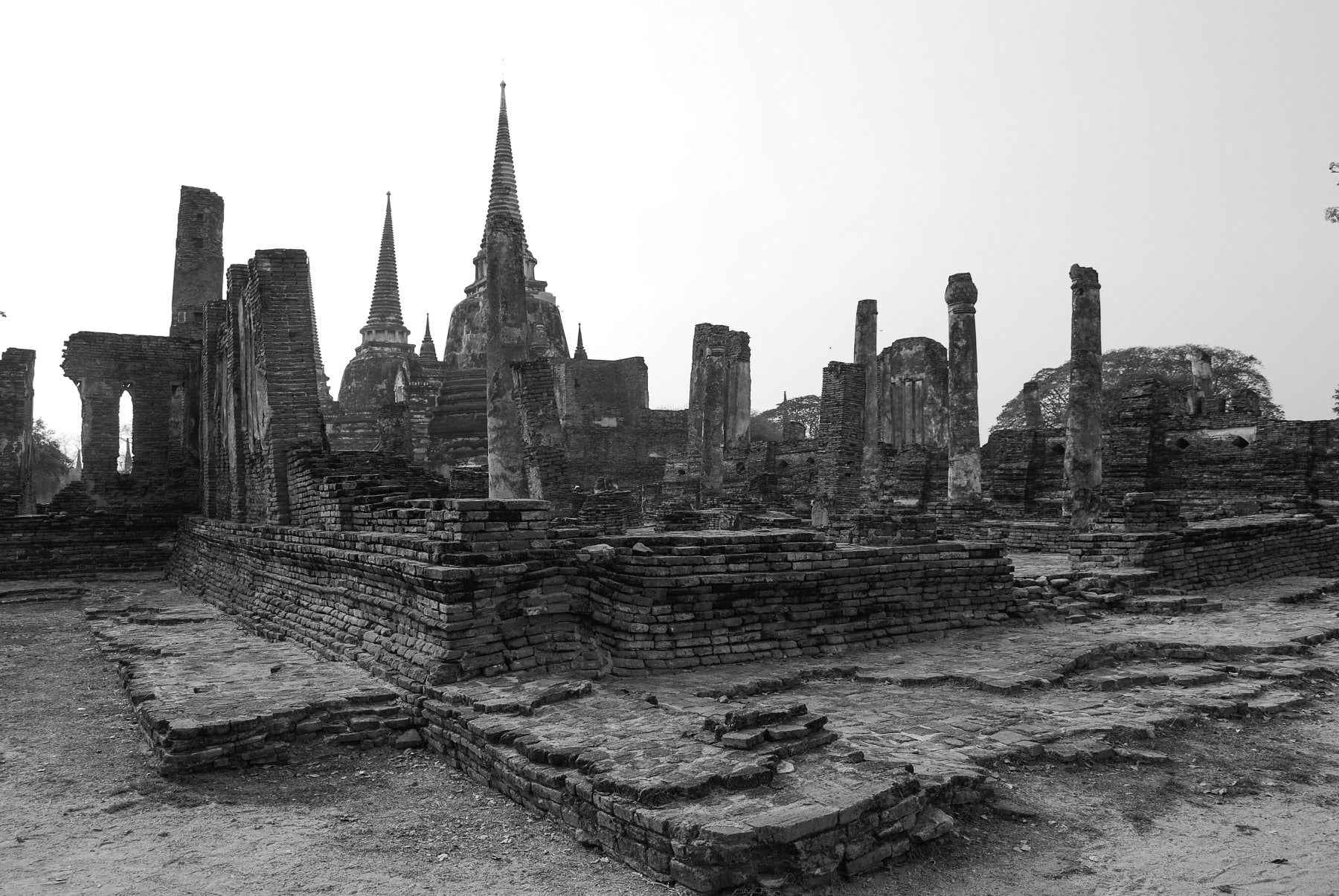
This photograph captures a historic temple site with tall stupas rising above weathered brick walls and stone columns. The monochrome tones highlight the textures and enduring beauty of ancient Thai architecture.
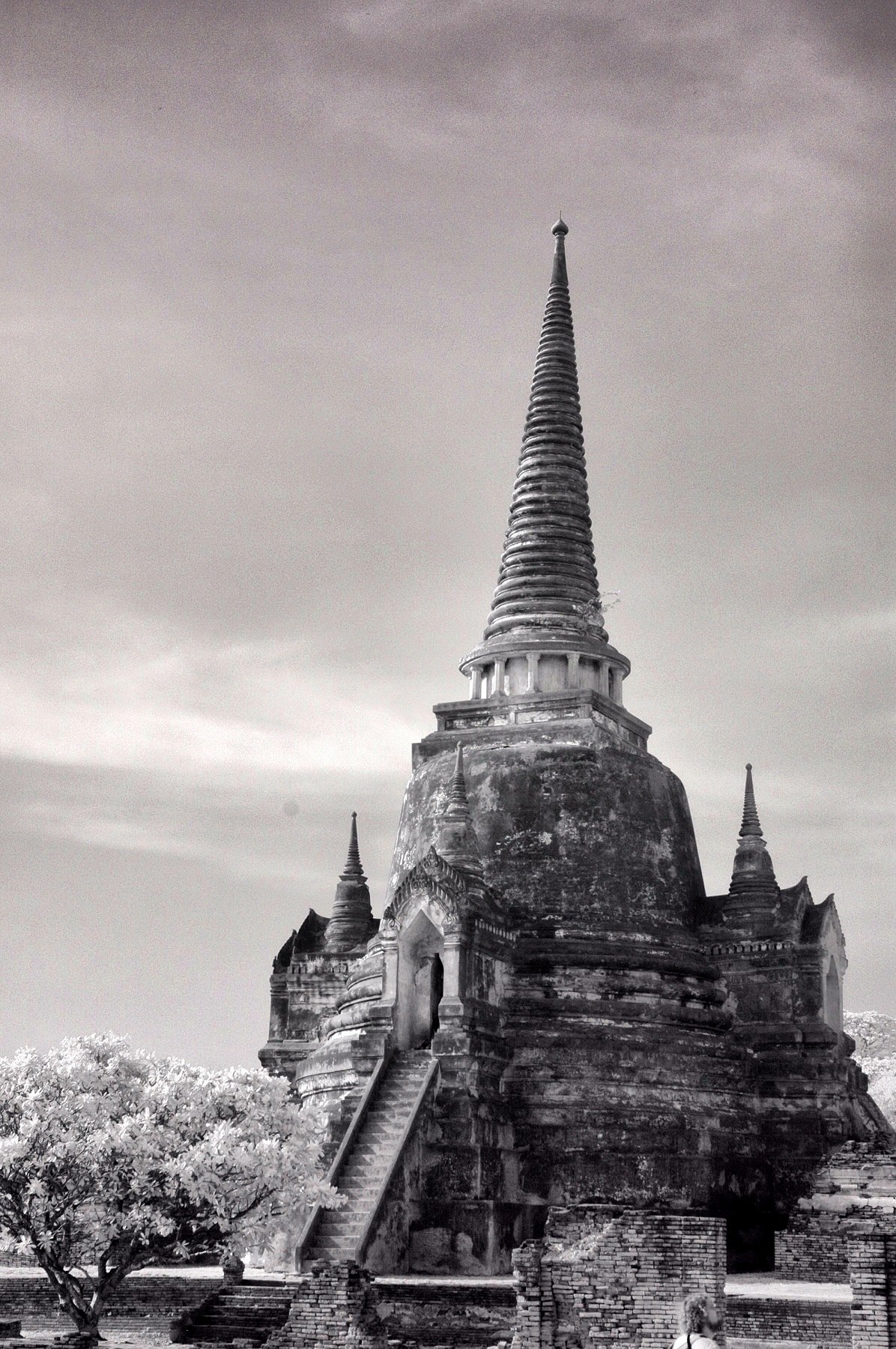
This fine art photograph features a monumental stupa with a tall conical spire rising above a weathered brick base. A staircase leads to an arched entrance, while smaller spires frame the structure. The monochrome palette emphasizes symmetry, texture, and historical depth.
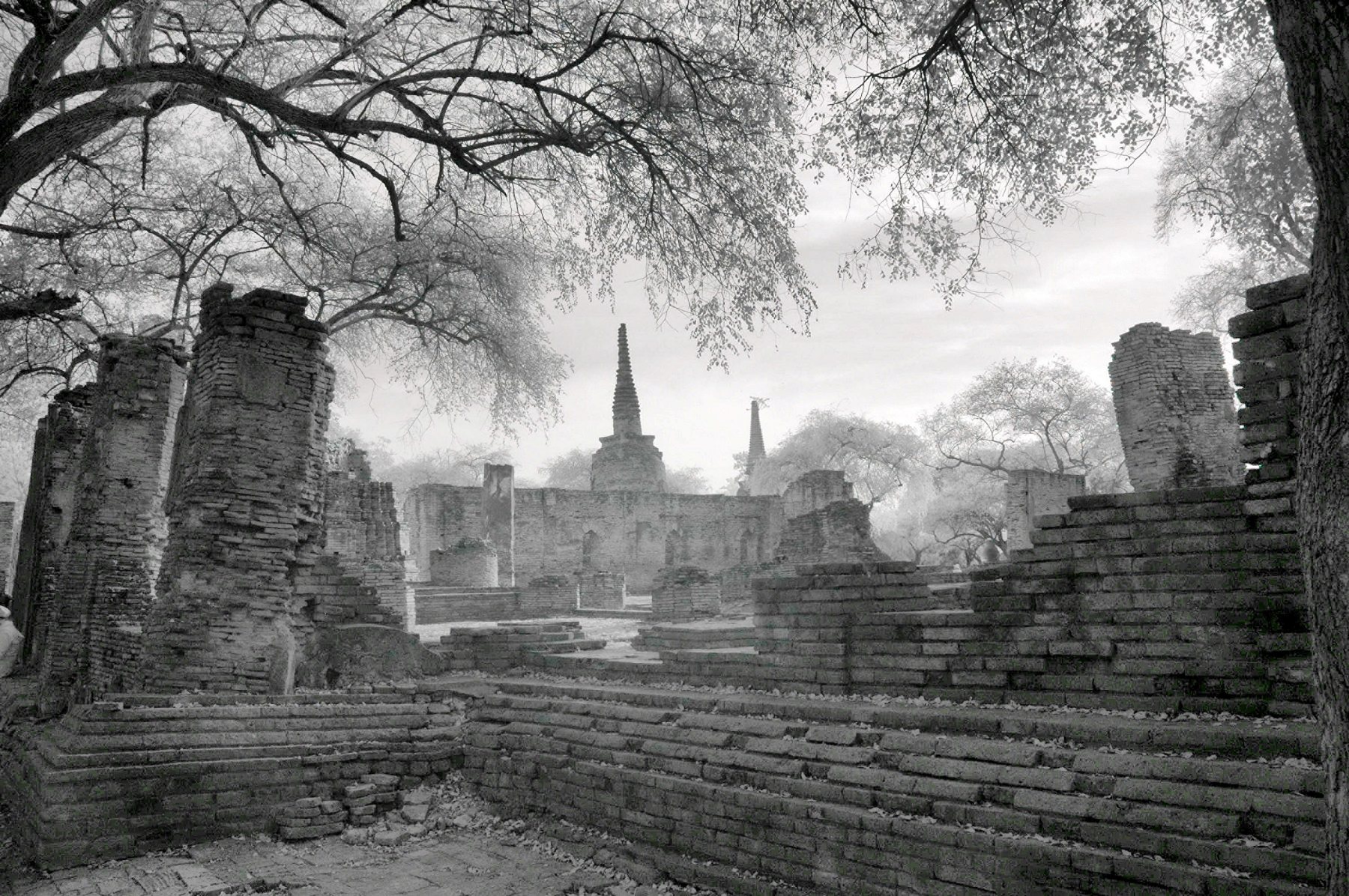
This black and white photograph captures ancient brick ruins framed by sprawling trees and distant stupas. The monochrome tones emphasize texture, age, and the quiet dignity of a once grand temple complex.
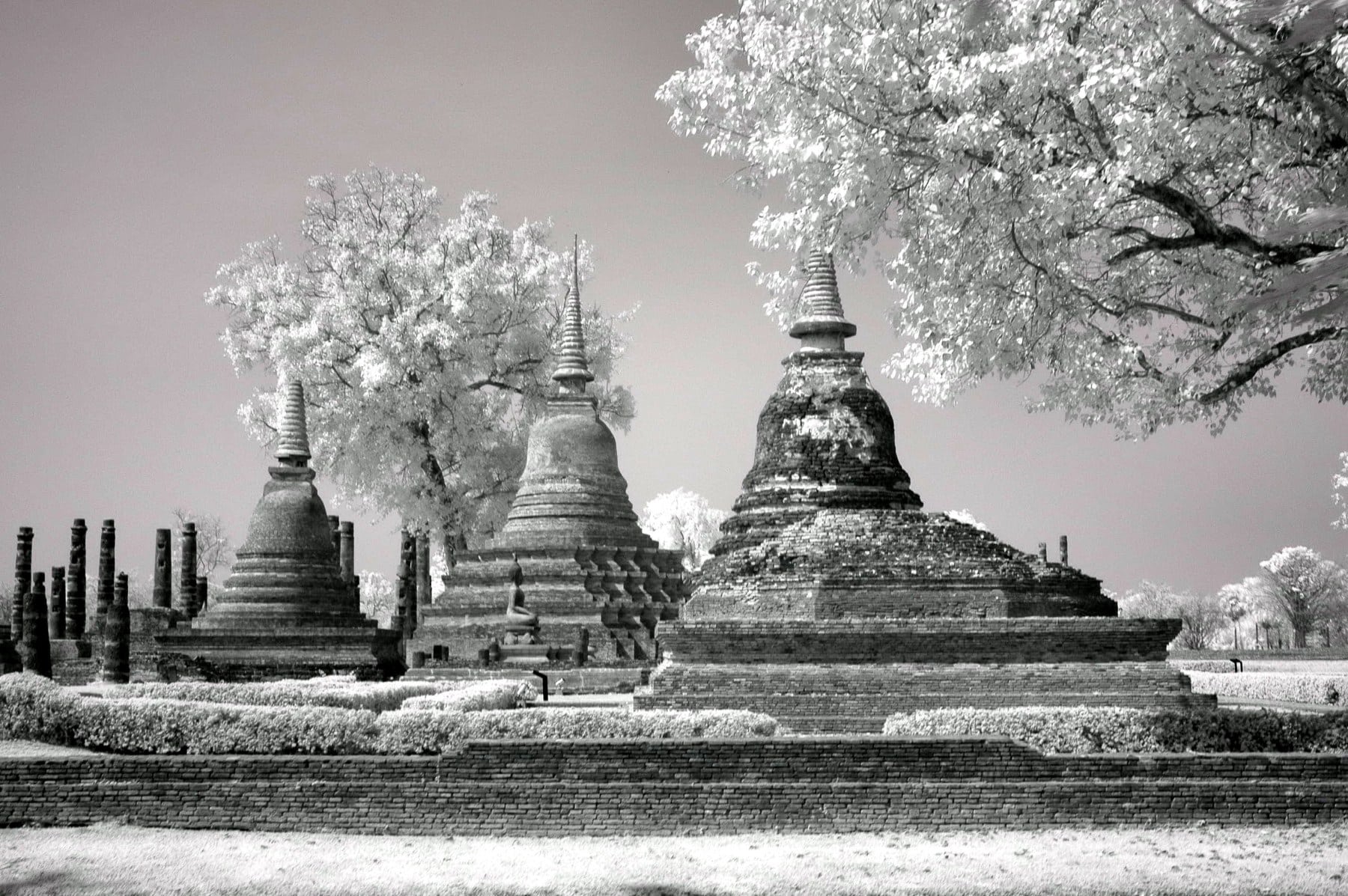
This infrared photograph captures a historic temple complex with towering brick stupas rising above bright, glowing foliage. The contrast between radiant trees and dark stone structures creates a surreal, dreamlike atmosphere. The composition highlights the architectural heritage and spiritual presence of ancient Thailand.
History of Ayutthaya
Founding a Strategic Capital
Ayutthaya rose in 1351 when King Ramathibodi I established a new capital on an island surrounded by three rivers. This location offered strong natural defenses and excellent access to regional trade routes. As a result, merchants from China, India, Persia, and Southeast Asia soon arrived.
The city expanded quickly and projected confidence, stability, and ambition. Its early rulers built temples, palaces, and administrative centers that shaped a powerful new kingdom.
Growth Through Trade and Diplomacy
During the 14th and 15th centuries, Ayutthaya steadily expanded its influence. Kings launched campaigns to secure nearby territories and strengthen regional authority. Meanwhile, the kingdom absorbed cultural ideas from Khmer and Mon traditions. These influences shaped its architecture, art, and political systems.
Trade networks continued to grow, and Ayutthaya became a major commercial hub. Consequently, foreign envoys recognized its strategic importance and established diplomatic ties across Asia.
A Global Crossroads in the Golden Age
Ayutthaya reached its golden age in the 16th and 17th centuries. European traders from Portugal, the Netherlands, France, and England arrived seeking spices, textiles, and forest products. Their presence transformed the city into a global crossroads. Temples and towering prangs dominated the skyline, while the population grew diverse and cosmopolitan.
Artisans produced refined sculptures, murals, and ceramics that reflected both local traditions and international influences. Therefore, Ayutthaya developed a vibrant cultural identity supported by strong laws, organized administration, and a capable military.
Conflict, Recovery, and Resilience
Despite its prosperity, Ayutthaya faced repeated conflicts. Burmese armies attacked the kingdom several times, threatening its stability. However, Ayutthaya often recovered quickly and rebuilt its defenses. Internal rivalries also challenged royal authority. Even so, the kingdom maintained regional influence and continued attracting merchants from across the world. Its resilience impressed visitors and reinforced its reputation as a powerful Southeast Asian state.
The Fall of a Great Kingdom
In 1767, Burmese forces launched a devastating assault on the capital. After a long siege, they breached the city’s defenses and destroyed temples, palaces, and archives. Consequently, Ayutthaya collapsed after more than four centuries of power.
Survivors fled, and General Taksin soon established a new capital at Thonburi. Although the political era ended, Ayutthaya’s cultural legacy endured.
Ayutthaya Today
Today, Ayutthaya stands as a UNESCO World Heritage Site. Its ruins reveal the kingdom’s artistic brilliance and architectural mastery. Ongoing conservation protects fragile monuments. As a result, Ayutthaya remains a powerful symbol of Thai heritage, resilience, and historical achievement.
Showing all 3 results
-

Thailand Canvas Art Prints
$229.00 (price_excluding_tax) Select options This product has multiple variants. The options may be chosen on the product page -
Thailand Fine Art Prints
$350.00 (price_excluding_tax) Select options This product has multiple variants. The options may be chosen on the product page -
Thailand Framed Art Prints
$550.00 (price_excluding_tax) Select options This product has multiple variants. The options may be chosen on the product page


Showing all 3 results