Venice Grand Canal
Venice Grand Canal
Italy

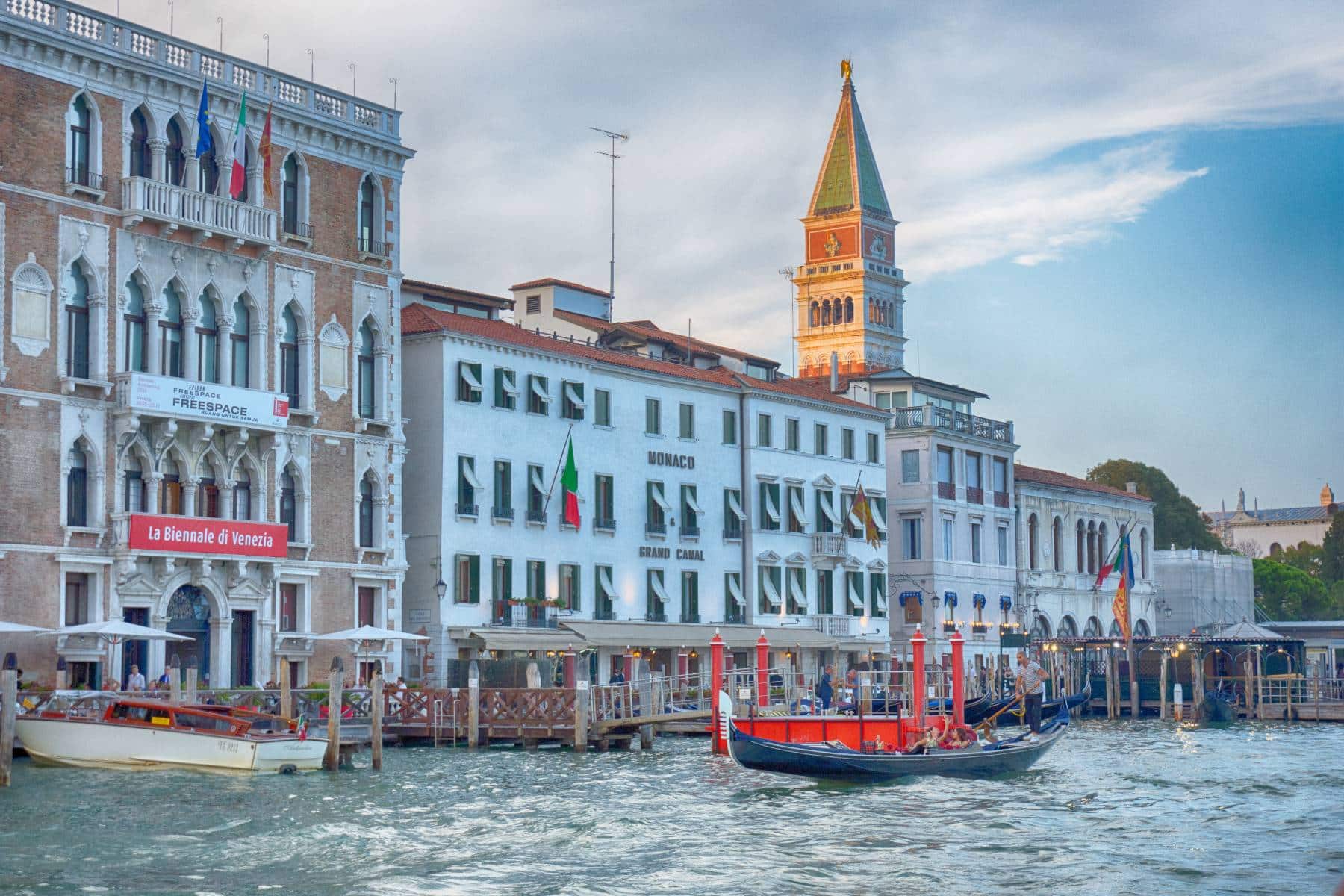


Venice Divided
To begin with, the Grand Canal flows through the heart of Venice, serving as its main waterway.
Next, it curves in a reverse ‘S’ shape, stretching about 3.8 kilometers across the city.
Its width changes along the route, ranging from 30 to 90 meters depending on location.
Moreover, the canal links the lagoon near Santa Lucia station to the San Marco Basin.
As a result, it divides Venice into two parts and guides boats through the city’s historic core.
Stunning Architectural Views
As you glide along the Grand Canal, you first notice the elegant buildings rising along its banks.
Next, over 170 structures appear, built between the 13th and 18th centuries in various architectural styles.
These buildings blend Romanesque, Gothic, and Renaissance elements, creating a rich visual tapestry.
For instance, the Ca’ d’Oro displays a delicate façade that captures the eye with its fine detail.
Meanwhile, the Palazzo Pesaro stands tall, showcasing Classical design and bold symmetry.
Together, these palaces reveal Venice’s wealth, power, and deep artistic tradition.
Romance
Moreover, the Grand Canal is not just a visual delight; it is a bustling thoroughfare. Traditional gondolas, though now outnumbered by motorized vaporetti (water buses) and private water taxis, still offer a romantic way to experience the canal.
Additionally, siren-equipped boats belonging to the police, fire, and emergency medical services frequently traverse the canal at high speeds, ensuring the safety and well-being of Venice’s residents and visitors.
Historical Significance
Transitioning to the canal’s historical significance, it likely follows the course of an ancient river, possibly a branch of the Brenta, which flowed into the lagoon2. The Grand Canal has been a vital part of Venetian life since the early settlements, serving as a major route for trade and transportation.
Over the centuries, it has witnessed the rise and fall of the Venetian Republic, playing a crucial role in the city’s economic and cultural development.
Bridges
Furthermore, the Grand Canal is home to several important bridges. The Rialto Bridge, the oldest and most famous, dates back to the 16th century. In addition, the Ponte degli Scalzi, Ponte dell’Accademia, and the modern Ponte della Costituzione, designed by Santiago Calatrava, connect various parts of the city, facilitating movement across the canal.
Conclusion
In conclusion, the Grand Canal is not merely a waterway; it is the lifeblood of Venice. Its blend of historical architecture, vibrant activity, and scenic beauty makes it a must-visit destination. Whether you are exploring by gondola, vaporetti, or simply admiring the view from one of its bridges, the Grand Canal offers an unforgettable glimpse into the soul of Venice.
So, when you visit this enchanting city, make sure to experience the magic of the Grand Canal.
Showing all 3 results
-

Italy Black and White Prints
$350.00 (price_excluding_tax) Select options This product has multiple variants. The options may be chosen on the product page -
Italy Canvas Art Prints
$229.00 (price_excluding_tax) Select options This product has multiple variants. The options may be chosen on the product page -
Italy Framed Art Prints
$550.00 (price_excluding_tax) Select options This product has multiple variants. The options may be chosen on the product page


Showing all 3 results