



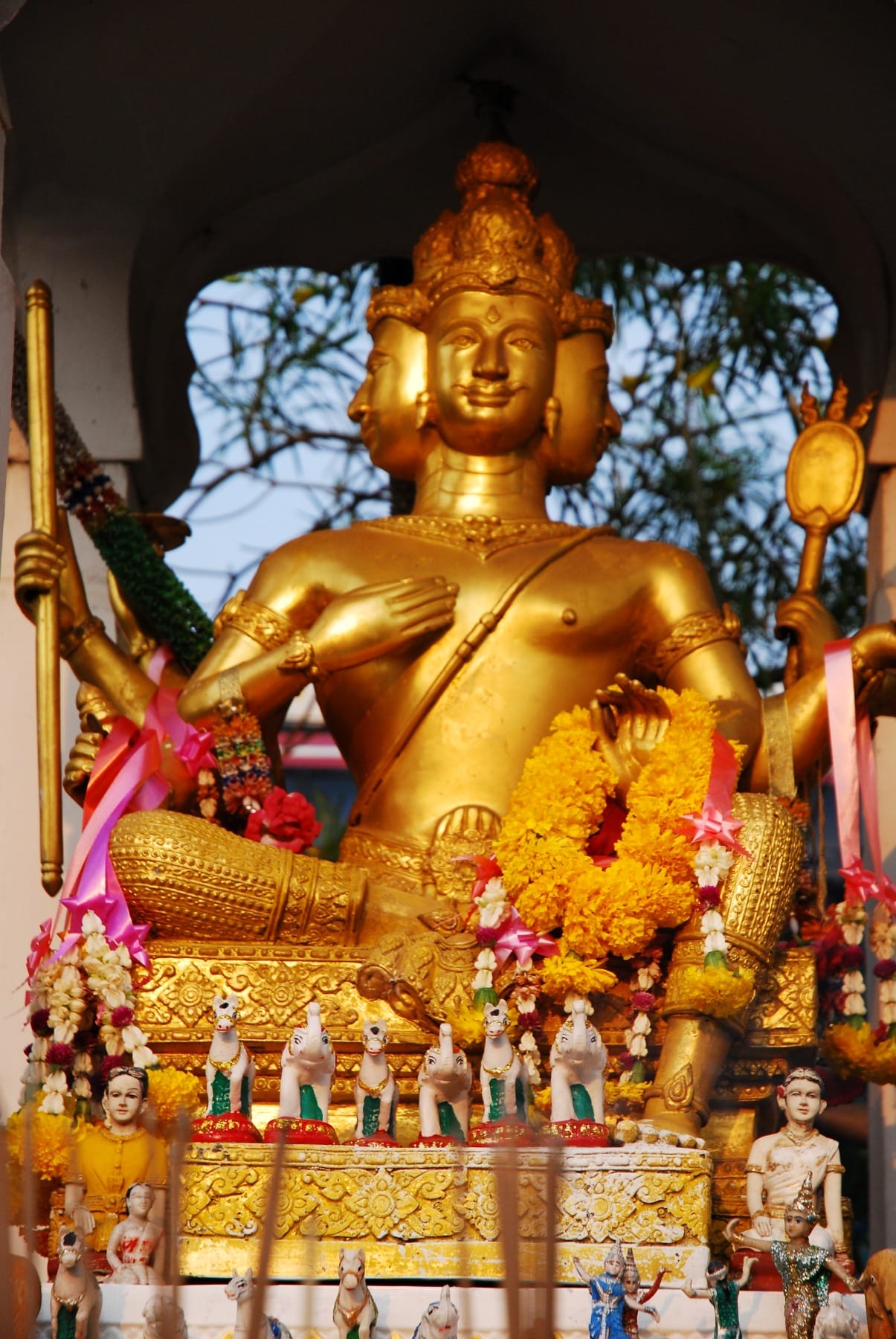

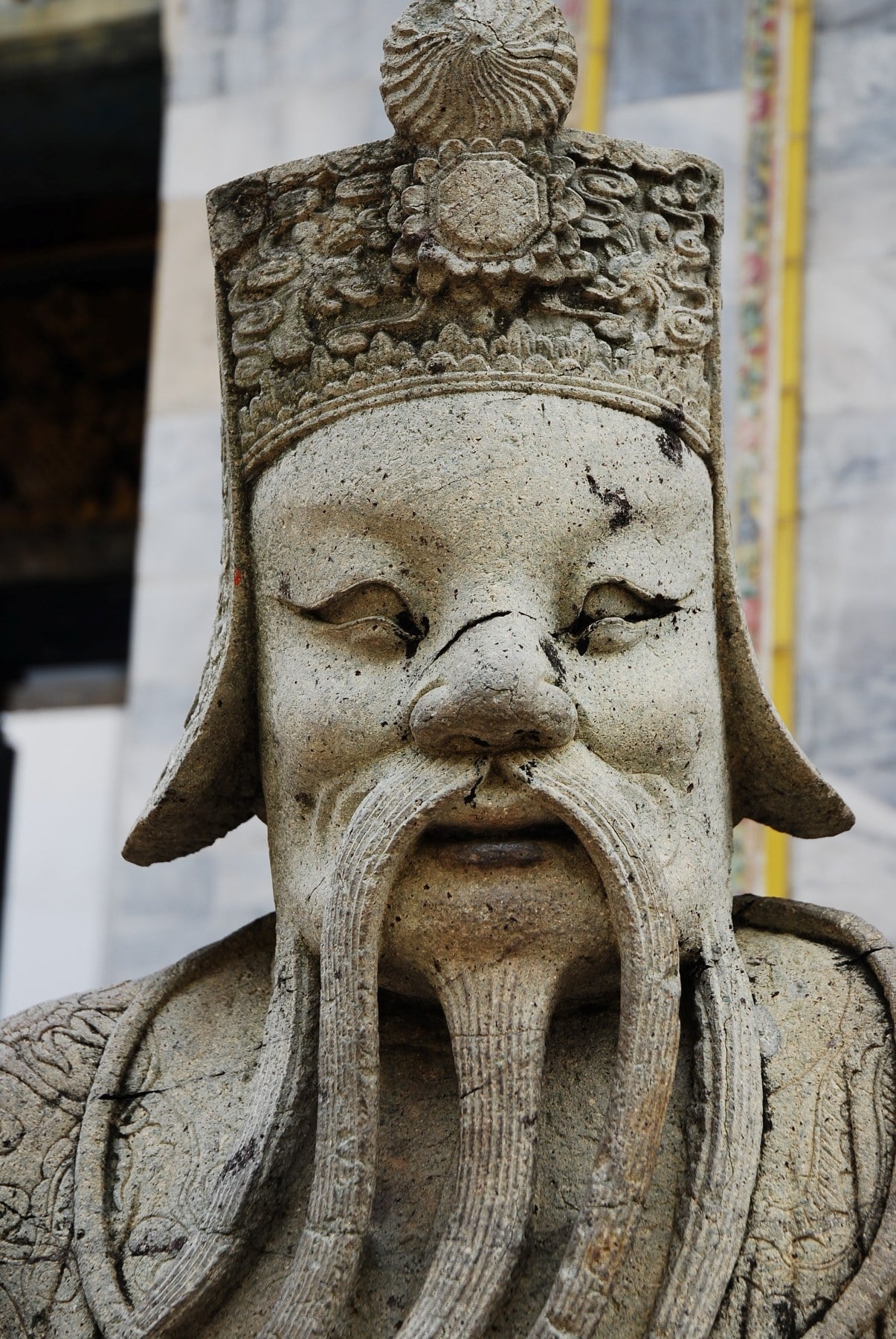

Description
Thailand Color Photography
by Jacqueline LaRocca
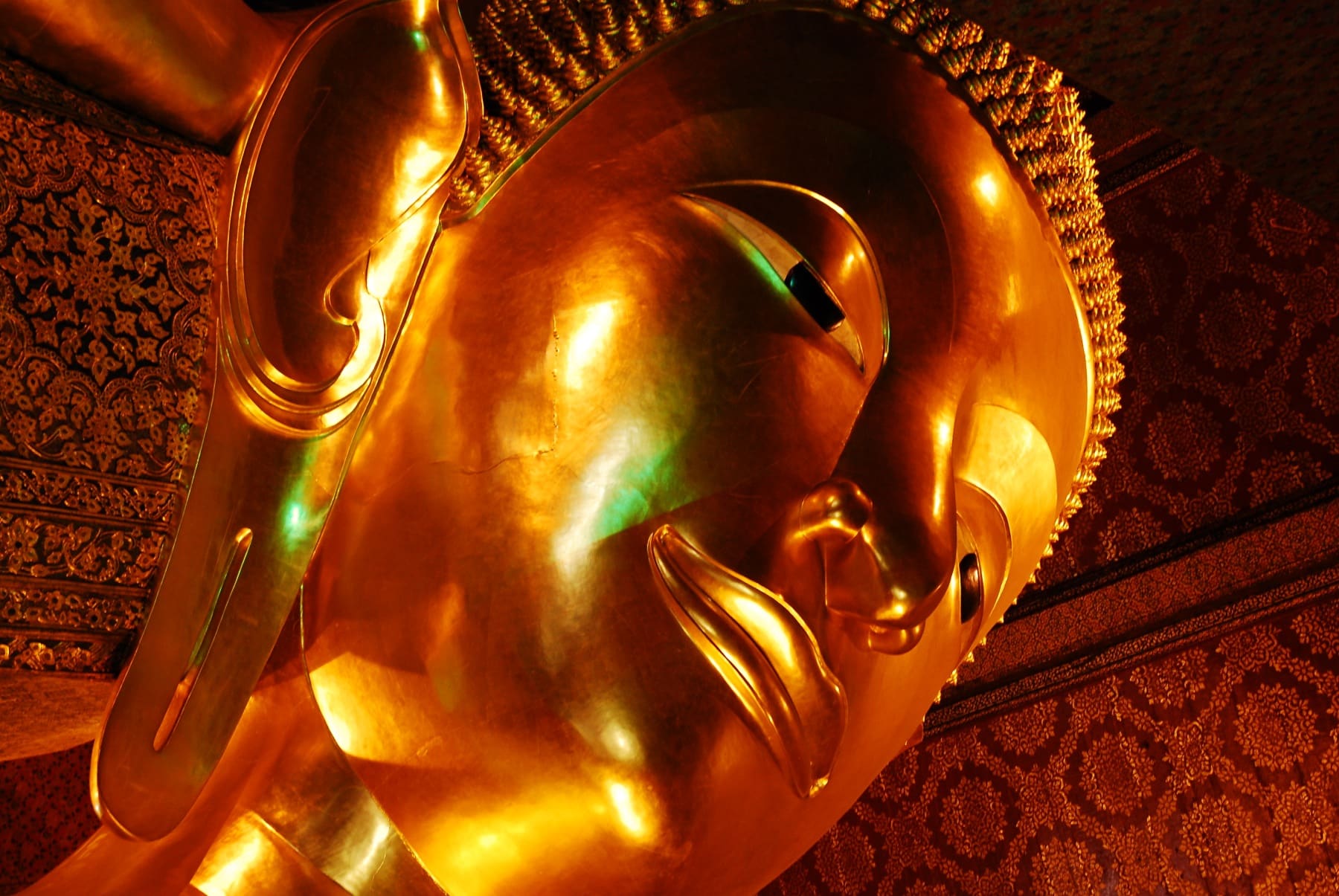
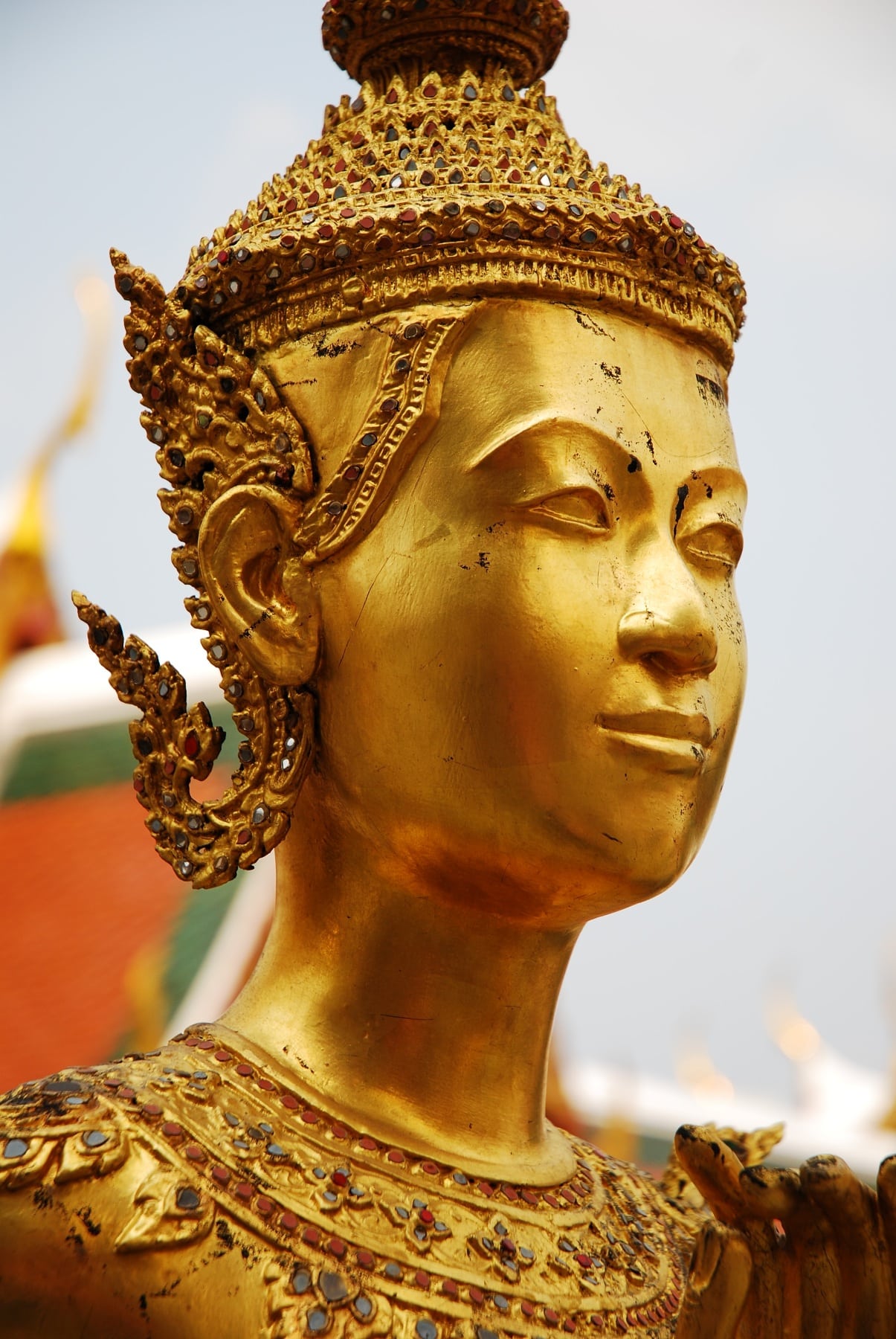
The serene face of the Reclining Buddha glows with gold leaf and soft light. Smooth contours and peaceful expression capture the essence of Thai Buddhist artistry.
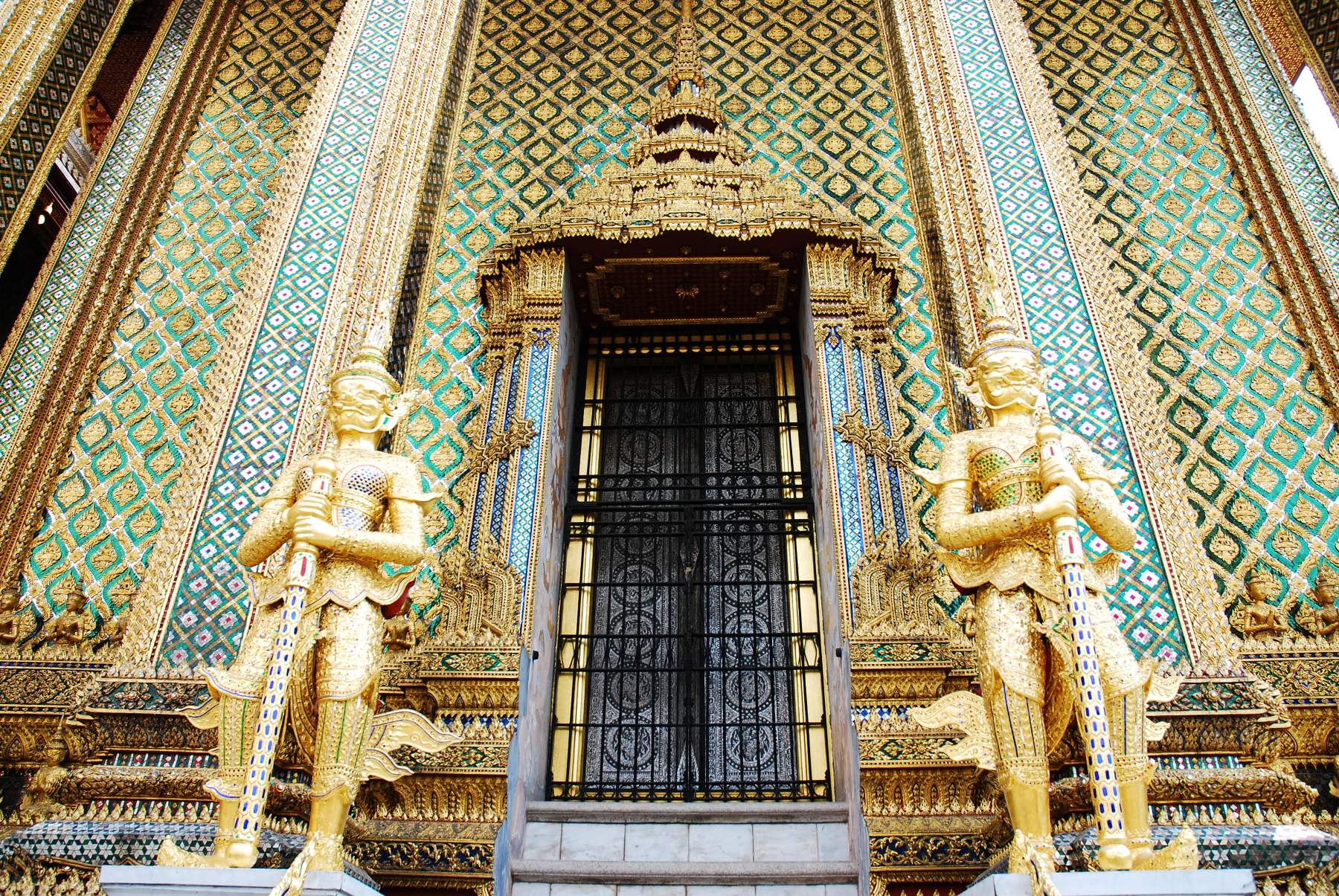
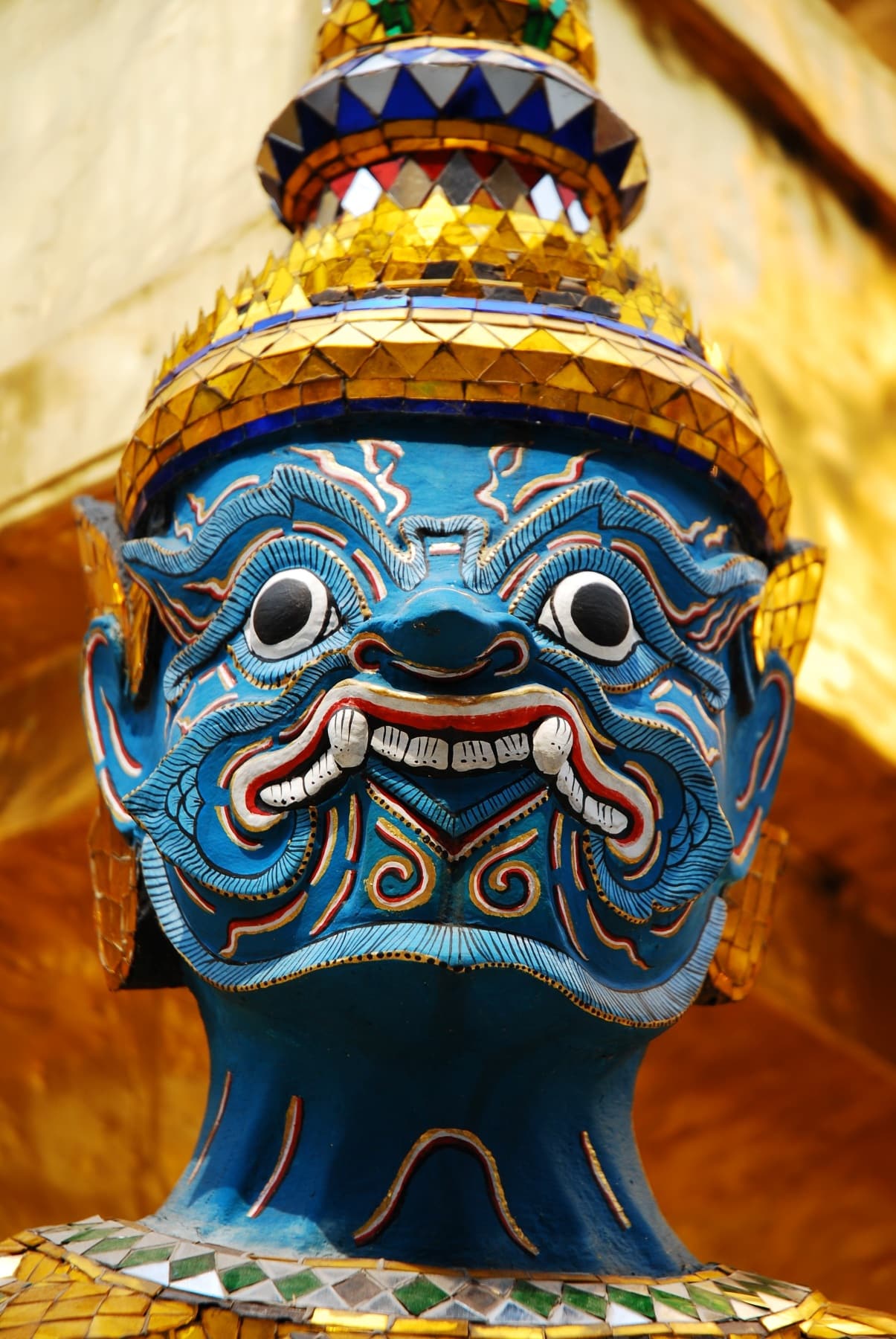
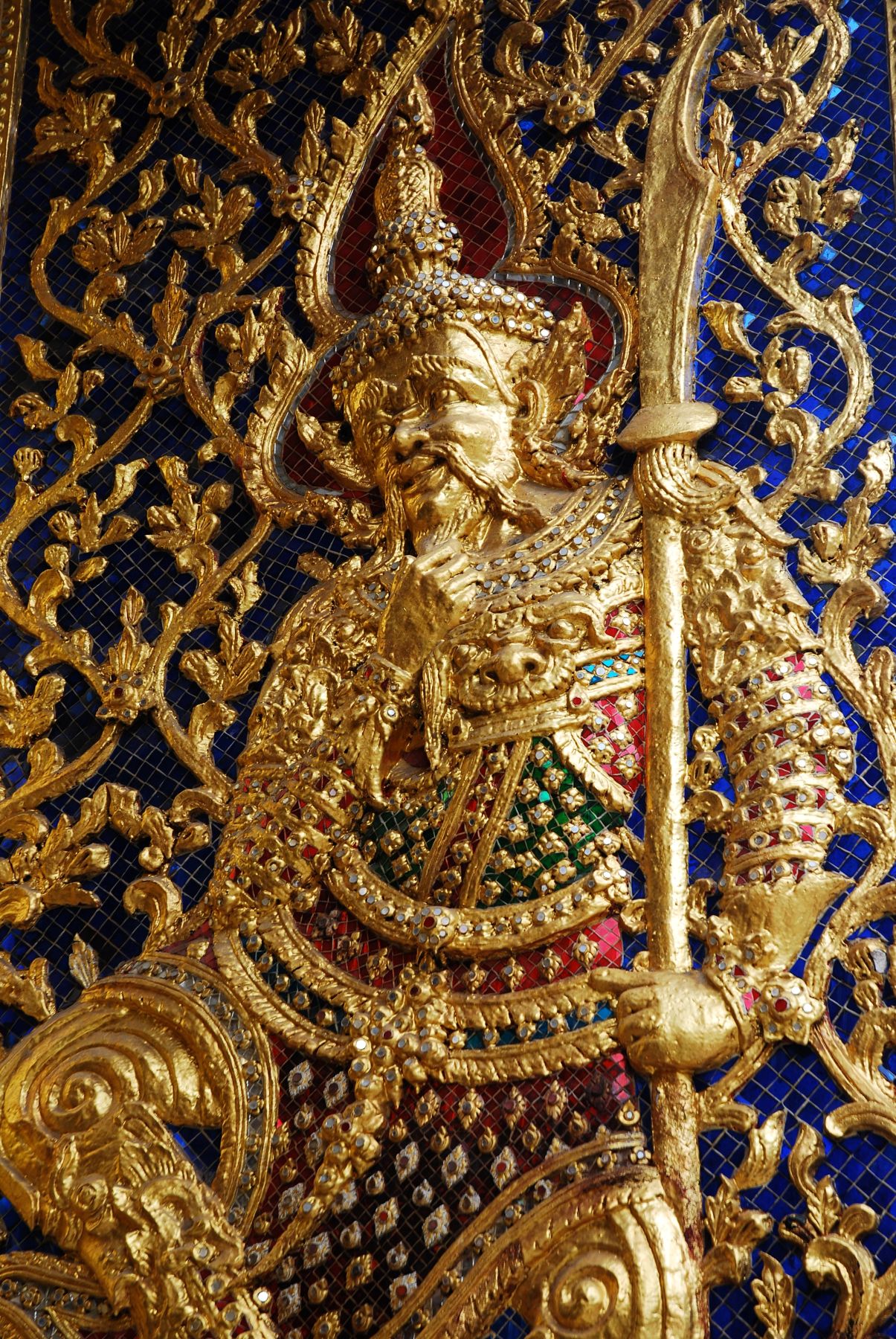
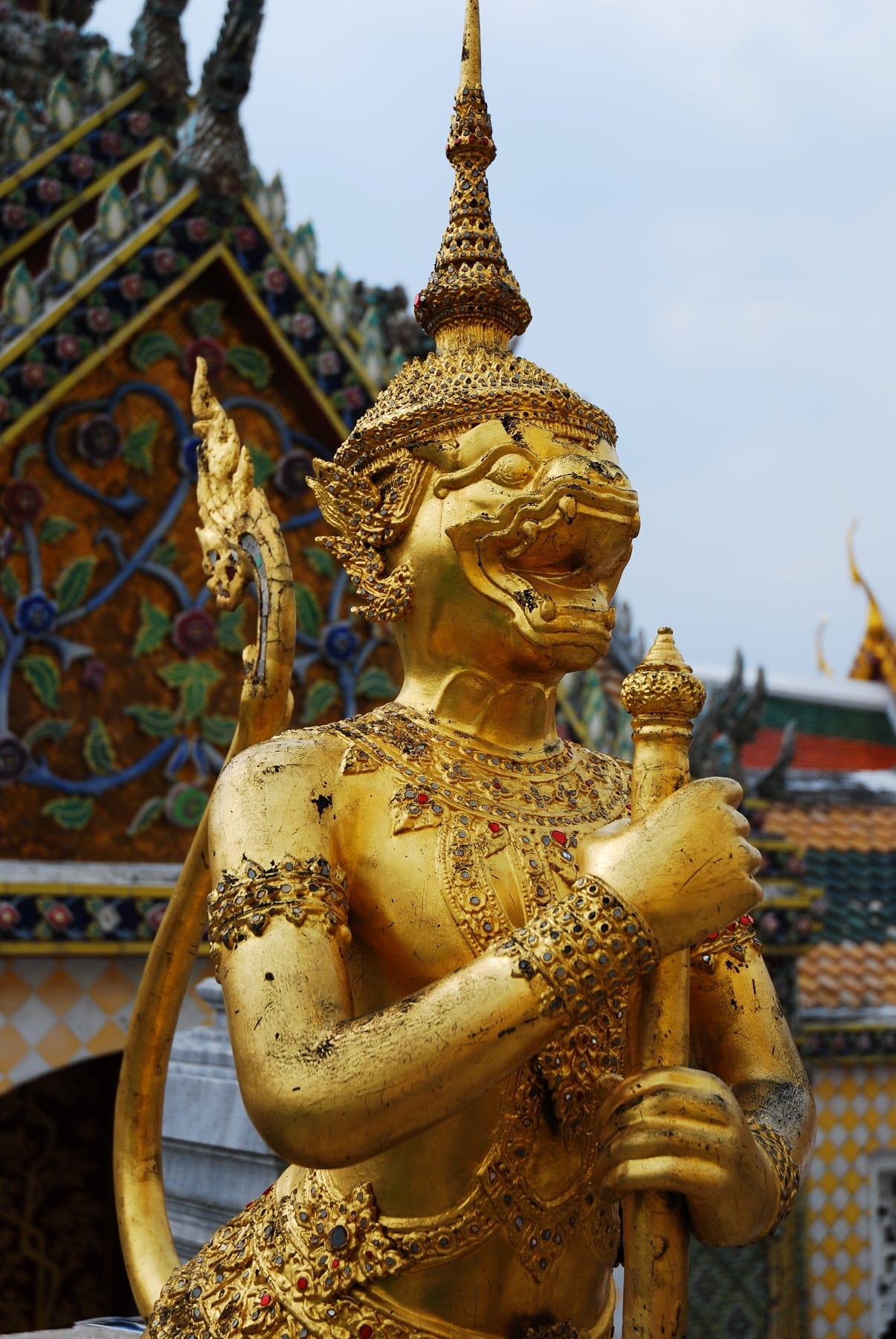
Two golden guardians flank an elaborately decorated temple doorway. Mosaic tiles, geometric patterns, and gold detailing create a visually stunning composition.
Early Civilizations
People settled in present-day Thailand over 4,000 years ago. Initially, they farmed rice and crafted bronze tools. Over time, they improved farming techniques and built pottery-based trade networks. As a result, Iron Age societies flourished. Consequently, early settlements laid the groundwork for larger regional cultures, beautifully captured in vivid Thailand color photography.
Dvaravati Culture and Khmer Influence
By the 6th century, Dvaravati culture emerged in central Thailand. Notably, it introduced Theravāda Buddhism and Mon architecture. Simultaneously, the Khmer Empire expanded westward. Hence, Thai regions absorbed Hindu beliefs and Khmer-style temples. Though Khmer dominance persisted for centuries, local groups gradually gained influence. Eventually, the Khmer grip weakened by the 13th century, marking a crucial period in the Thailand color photography legacy.
Emergence of the Sukhothai Kingdom
In 1238, Thai nobles declared independence from Khmer rule. Thus, the Sukhothai Kingdom rose in north-central Thailand. Under King Ramkhamhaeng, Sukhothai expanded rapidly. Furthermore, he promoted Buddhism and developed the Thai alphabet. Even so, after his death, Sukhothai weakened. The vibrancy of Thailand’s history was captured in color, allowing photography to document how Ayutthaya absorbed it by the late 1300s.
Ayutthaya’s Ascent and Interactions
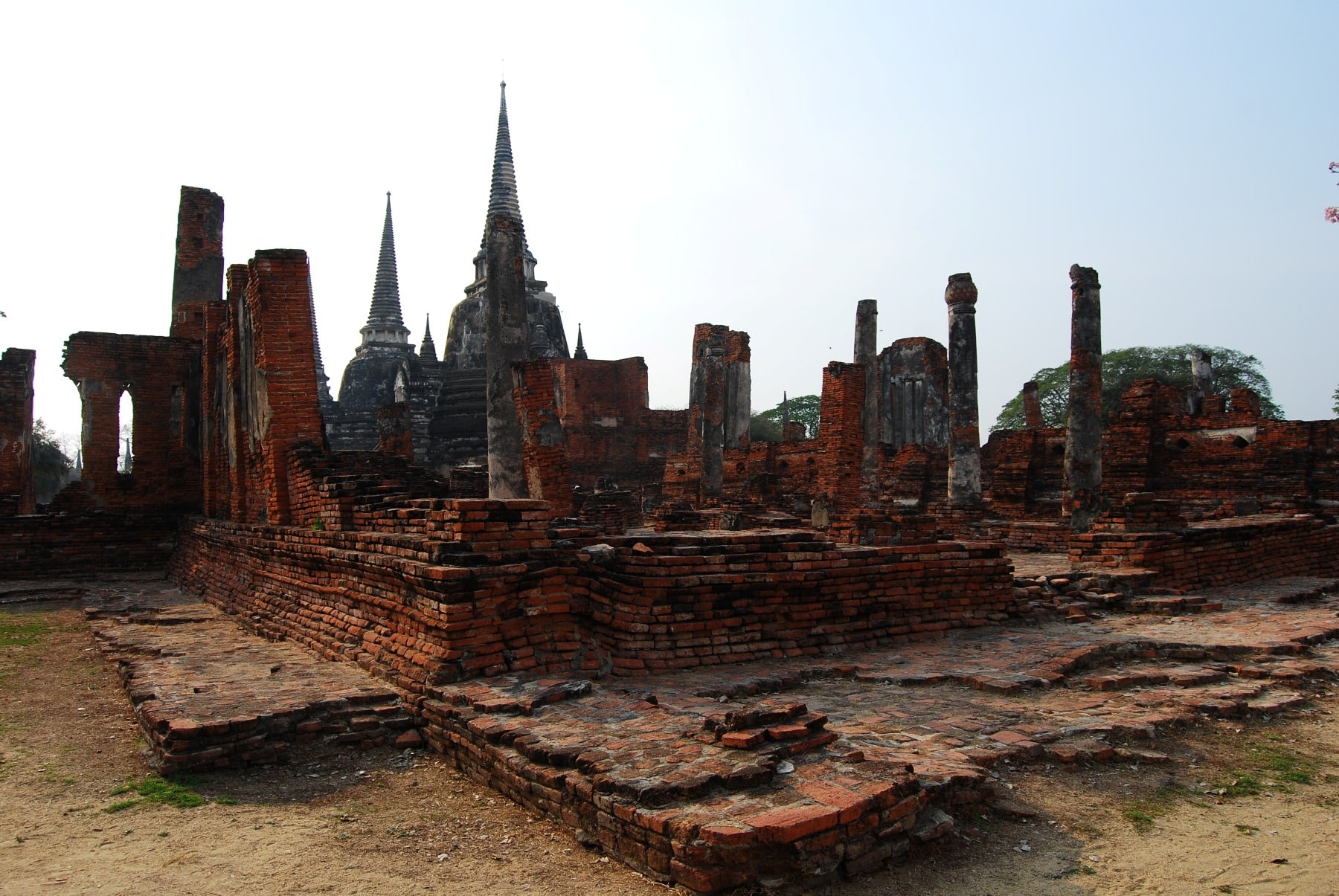
Founded in 1351, Ayutthaya became a dominant Southeast Asian power. Soon, it engaged with traders from Europe, India, and China. As the kingdom grew, it incorporated multiple cultures and belief systems. Meanwhile, it retained core Buddhist practices. Although Burmese armies attacked in 1569, Ayutthaya rebounded. Thailand color photography artfully encapsulates the history of Ayutthaya, even as another Burmese invasion in 1767 caused its complete destruction.
Thonburi and Bangkok Dynasties
Following Ayutthaya’s fall, General Taksin restored order by founding the Thonburi Kingdom. He unified territories and repelled foreign forces. However, his rule proved unstable. In 1782, a coup installed General Chakri as king, launching the Chakri Dynasty. Stunning Thailand color photography showcases this pivotal era, during which the capital moved to Bangkok. From there, Thai identity steadily evolved under firm royal leadership.
Modernization and Colonial Pressure
Throughout the 19th century, Thailand—then known as Siam—faced growing Western influence. In response, Kings Mongkut and Chulalongkorn modernized rapidly. They built railways, established schools, and ended slavery. More importantly, these efforts helped Siam avoid European colonization. At the same time, diplomacy became a vital tool in preserving sovereignty, beautifully highlighted by color photography of Thailand during its transformation.
From Absolute to Constitutional Monarchy
In 1932, a bloodless coup transformed Thailand into a constitutional monarchy. As a result, parliamentary government replaced absolute rule. Several years later, Siam officially became “Thailand” in 1939. During World War II, it sided with Japan—but postwar diplomacy preserved independence. However, political turbulence persisted. Frequent coups and shifting alliances defined Thai politics in the decades that followed, captured vividly in color through photography.
Economic Growth and Social Tensions
Starting in the 1960s, Thailand began to industrialize. As a result, cities grew quickly while fewer people stayed in rural areas. At the same time, tourism increased sharply, bringing major economic benefits. Meanwhile, students began protesting against military rule, calling for democracy. Although some reforms were made, repeated military coups continued to disrupt political stability.
Even so, Thailand’s economy stayed strong and continued to grow in different ways, with Thailand color photography capturing both vibrant cityscapes and serene rural life.
21st Century Thailand: Harmony and Discord
In recent decades, Thailand achieved regional influence. Still, it grappled with inequality and political unrest. Mass protests erupted in 2006, 2010, and 2020—often led by youth and urban activists. In contrast, rural voters tended to support traditional elites.
Nevertheless, Thailand maintained cultural continuity. Its royal ceremonies, temples, and festivals remained deeply rooted in national life. Thus, while modern challenges persist, Thailand continues to evolve—drawing strength from its complex past.
If you like Thailand Color Photography, you may also like

Reviews
There are no reviews yet.