Edinburgh Castle
Edinburgh Castle
Scotland


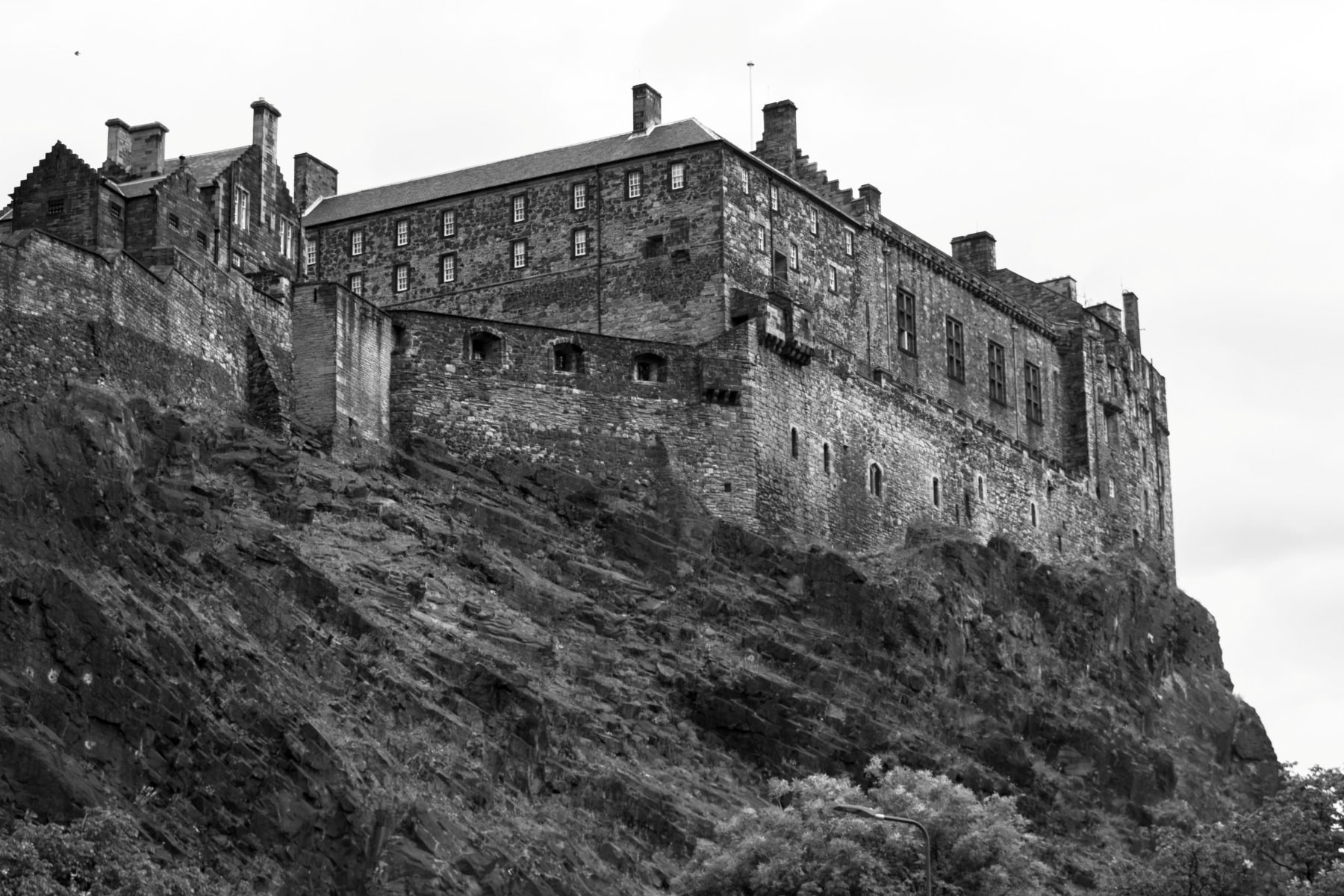
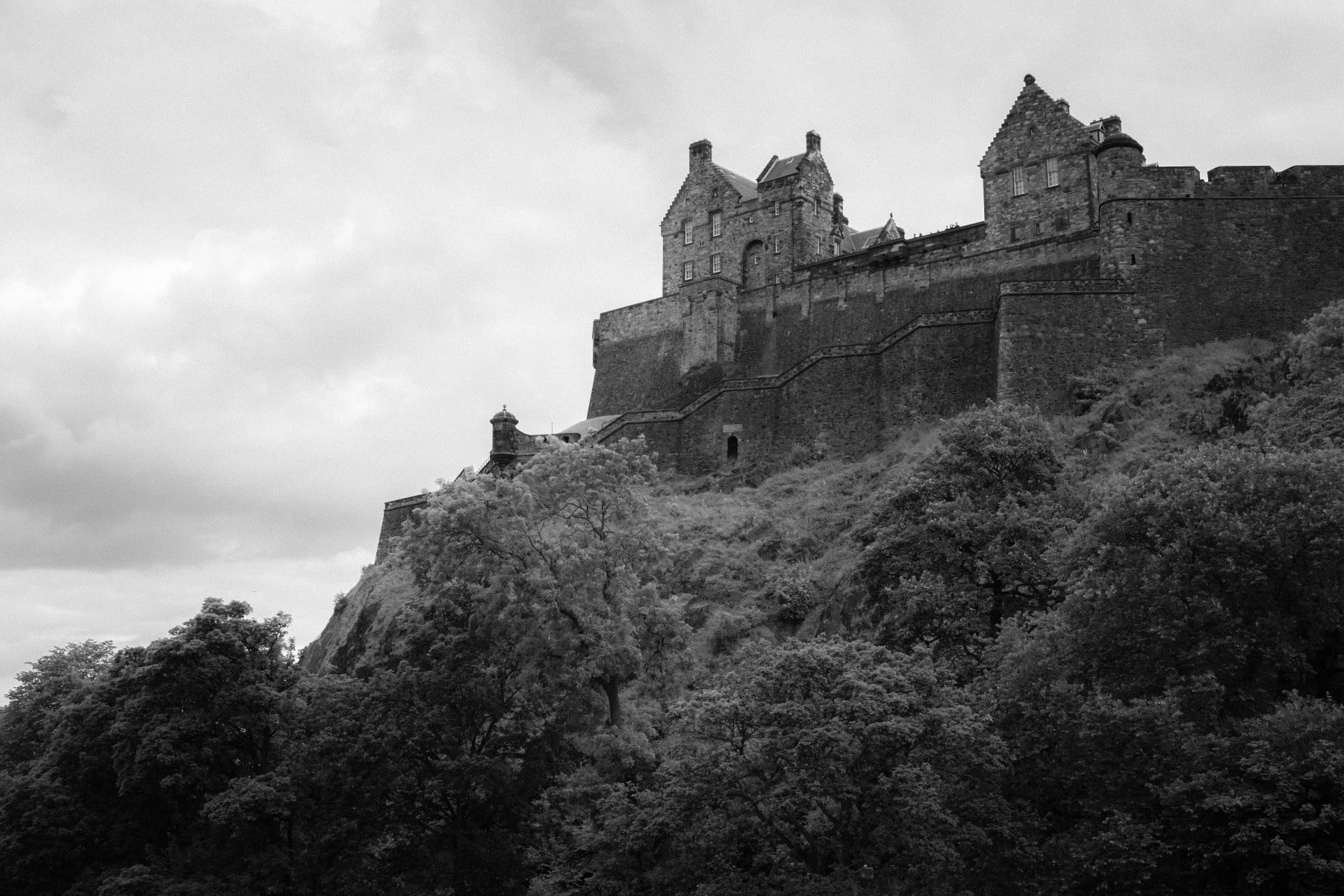
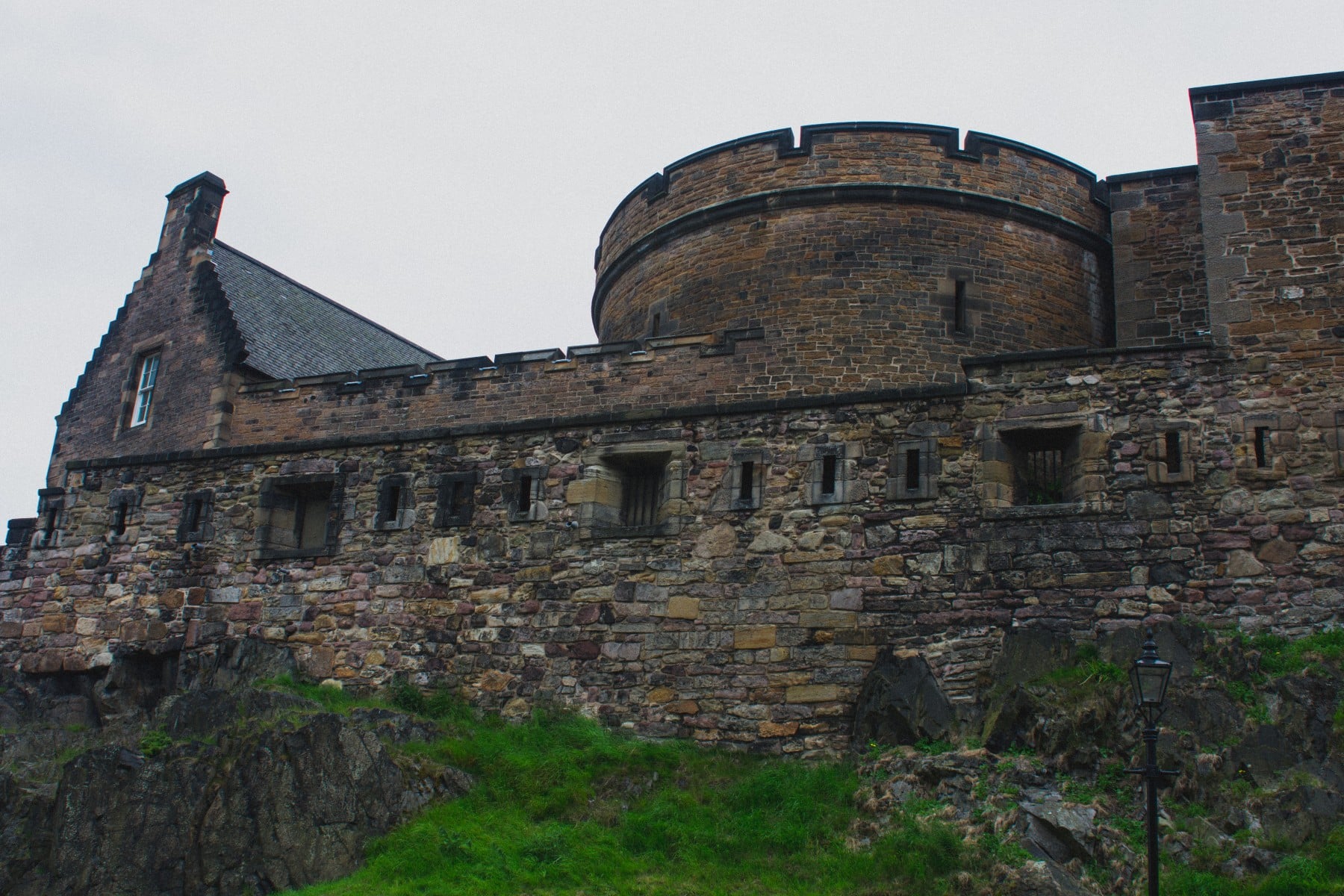
This fine art photograph captures a fortified stone structure with a round tower rising above the battlements. Mossy rock and green grass frame the scene.
Rendered in natural tones, the image highlights the defensive architecture and weathered textures of Scottish stonework.
This artwork stands out for its strong vertical lines and historic character.
Construction
Edinburgh Castle, perched atop Castle Rock, is a historic fortress that has dominated the skyline of Edinburgh, Scotland, for centuries. Its construction began in the 12th century under the reign of King David I, who recognized the strategic importance of the site.
Additionally, built on an extinct volcano, the castle’s elevated position also provided a formidable defense against invaders. Over the years, various monarchs expanded and fortified the castle, in addition, adding structures like St. Margaret’s Chapel. Additionally, the oldest surviving building in Edinburgh, and also the Great Hall, completed in 1511 for King James IV.
Scotland’s turbulent past
Throughout its history, Edinburgh Castle has played a pivotal role in Scotland’s turbulent past. It also served as a royal residence, military stronghold, and symbol of Scottish sovereignty.
During the Wars of Scottish Independence, the castle changed hands multiple times between the Scots and the English. In 1314, Thomas Randolph, also a nephew of Robert the Bruce, famously recaptured the castle in a daring night raid.
The castle’s defenses continued to evolve, with significant additions like the Half Moon Battery, built after the Lang Siege of 1573.
Culture
Culturally, Edinburgh Castle is a treasure trove of Scottish heritage. It houses the Honours of Scotland, the oldest Crown jewels in Britain, and the Stone of Destiny, used in the coronation of Scottish kings.
Architecture
The castle’s rich history is also reflected in its architecture, which showcases a blend of medieval, Renaissance, and later styles. Visitors can explore the Royal Palace, where Mary, Queen of Scots, gave birth to James VI, who later united the crowns of Scotland and England in 1603.
Significance
The significance of Edinburgh Castle extends beyond its historical and cultural value. It is a symbol of Scottish identity and resilience, having withstood numerous sieges and conflicts. Today, the castle is one of Scotland’s most popular tourist attractions, drawing millions of visitors each year.
It hosts the annual Royal Edinburgh Military Tattoo, a spectacular display of military bands and performances set against the backdrop of the castle’s illuminated walls.
Conclusion
In conclusion, Edinburgh Castle’s construction, history, culture, and significance are deeply intertwined with the story of Scotland.
From its origins as a royal stronghold to its role as a symbol of national pride, the castle embodies the resilience and enduring legacy of the Scottish people.
Its preservation ensures that future generations can continue to explore and appreciate this iconic landmark
Showing all 6 results
-

Scotland Canvas Art Prints
$229.00 (price_excluding_tax) Select options This product has multiple variants. The options may be chosen on the product page -
Scotland Color Canvas Prints
$229.00 (price_excluding_tax) Select options This product has multiple variants. The options may be chosen on the product page -
Scotland Color Framed Prints
$550.00 (price_excluding_tax) Select options This product has multiple variants. The options may be chosen on the product page -
Scotland Color Photography
Price range: $190.00 through $350.00 (price_excluding_tax) Select options This product has multiple variants. The options may be chosen on the product page -
Scotland Fine Art Prints
$229.00 (price_excluding_tax) Select options This product has multiple variants. The options may be chosen on the product page -
Scotland Framed Art Prints
$550.00 (price_excluding_tax) Select options This product has multiple variants. The options may be chosen on the product page




Showing all 6 results