Vietnam Veterans Memorial
Vietnam Veterans Memorial
by Jacqueline LaRocca

History of the Vietnam Veterans Memorial
Remembering a Divisive War
The Vietnam Veterans Memorial stands in Washington, D.C. as a powerful tribute to those who served in the Vietnam War. The conflict, which lasted from 1955 to 1975, left deep scars on the United States.
Because the war sparked intense political debate, returning veterans often faced a divided public.
Consequently, many felt overlooked or misunderstood. The memorial emerged from a desire to honor their service with dignity, regardless of politics.
A National Effort to Honor Veterans
In the late 1970s, a group of Vietnam veterans began advocating for a national memorial. They wanted a space that recognized sacrifice without taking a political stance.
Congress approved the project in 1980. Soon afterward, planners selected a site on the National Mall near the Lincoln Memorial. Therefore, the memorial would stand within a landscape dedicated to national memory and reflection. A design competition followed, attracting hundreds of submissions.
A Bold and Transformative Design
Maya Lin, a 21‑year‑old architecture student, won the competition with a design that challenged traditional expectations. She envisioned two long, black granite walls cut into the earth. The walls would list the names of more than 58,000 service members who died or went missing.
Because the polished stone reflects visitors’ faces, the design creates a quiet dialogue between past and present. As a result, the memorial invites personal reflection rather than heroic imagery.
The walls descend toward a central point and then rise again. This shape symbolizes a journey into grief and a return toward healing. Meanwhile, the chronological listing of names allows families and friends to trace the timeline of the war.
Consequently, the memorial became both a historical record and an emotional space.
Controversy, Completion, and Acceptance
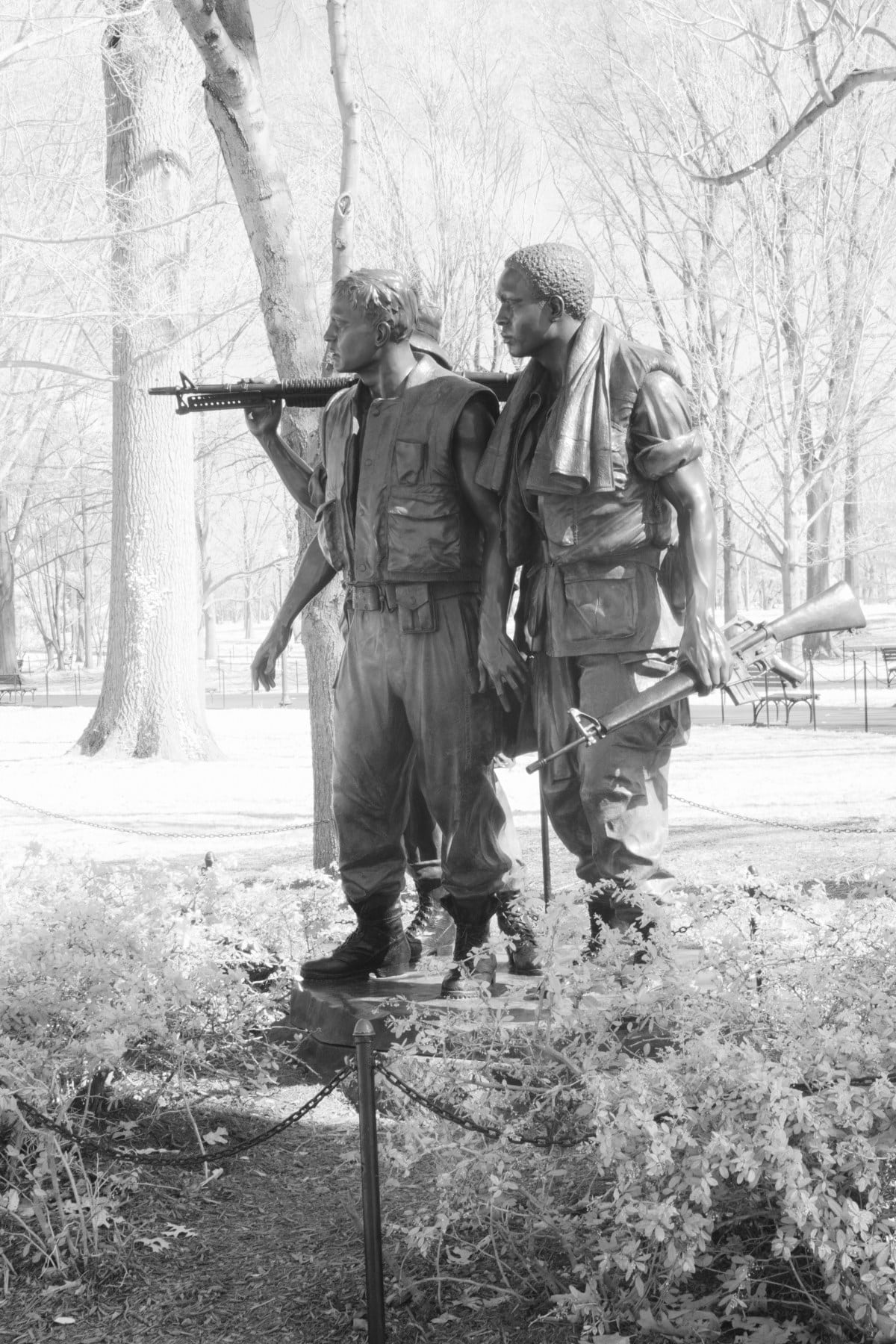
When the design was announced, some critics argued that it lacked traditional symbols of honor. In response, a bronze statue of three servicemen and an American flag were added nearby.
Even so, the original wall remained the memorial’s defining feature. When it was dedicated in 1982, thousands attended. Over time, public opinion shifted. Visitors left flowers, letters, and mementos.
Families found comfort in touching engraved names. Therefore, the memorial grew into one of the nation’s most beloved sites of remembrance.
The Memorial Today
Today, the Vietnam Veterans Memorial stands as a place of reflection, healing, and national memory. Its simple design, powerful names, and quiet setting continue to move millions.
As a result, the memorial ensures that the sacrifices of Vietnam veterans remain permanently honored within the American story.
Showing all 2 results
-

DC Fine Art Prints
$229.00 (price_excluding_tax) Select options This product has multiple variants. The options may be chosen on the product page -

District of Columbia Framed Prints
$550.00 (price_excluding_tax) Select options This product has multiple variants. The options may be chosen on the product page

Showing all 2 results