The Supreme Court
The Supreme Court
Washington DC
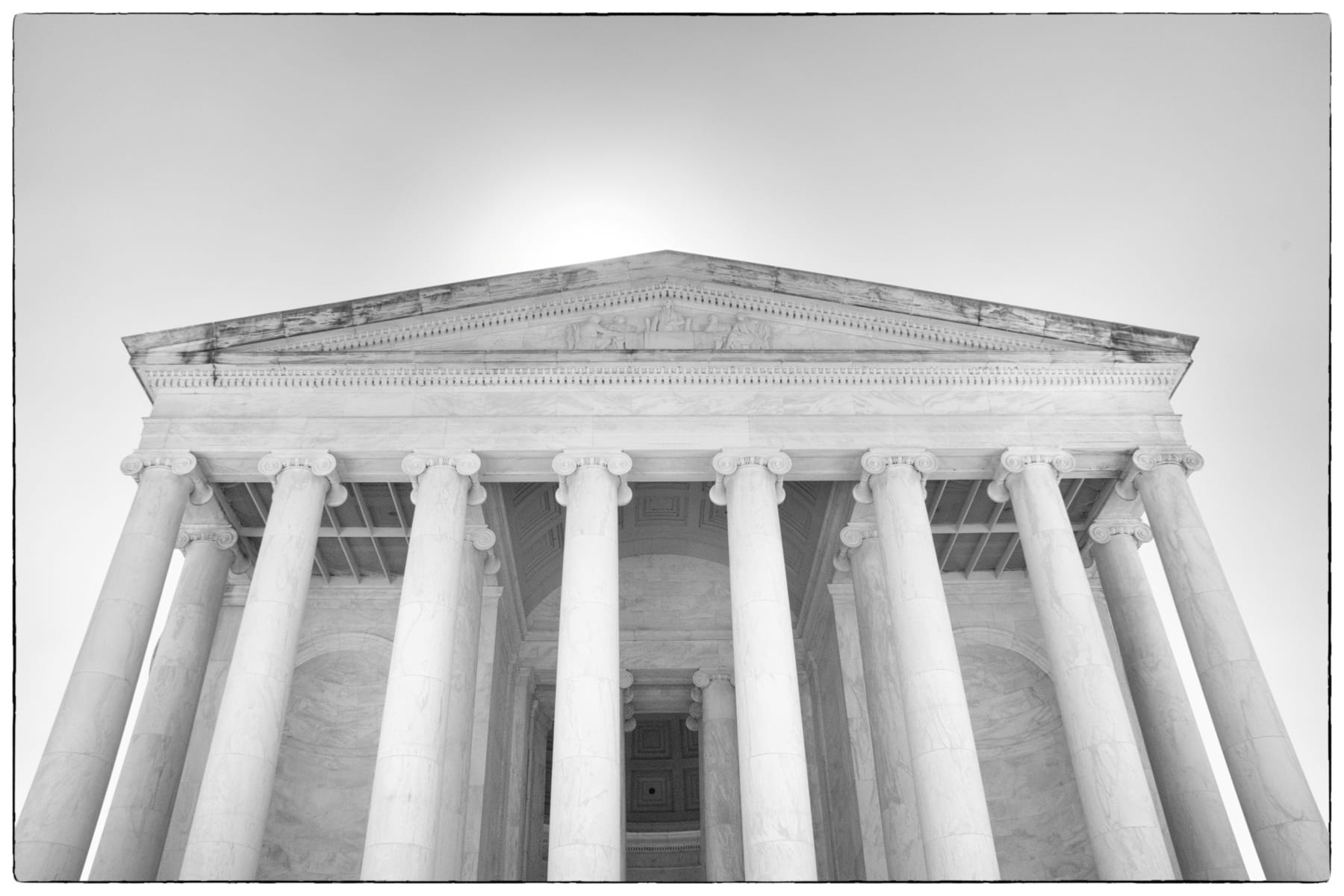
The Building
The Supreme Court Building, an architectural marvel, stands as a symbol of justice in the United States.
No Permanent Home
Construction of the Supreme Court Building began in 1932, ending a long era without a permanent judicial home.
At first, the Court met in temporary spaces such as the Exchange Building in New York City and Independence Hall.
Later, when the federal government relocated to Washington, D.C., in 1800, the Court moved into the Capitol Building.
Although this arrangement lasted for over a century, it remained a provisional solution until construction finally commenced
Construction
Chief Justice William Howard Taft, formerly President, strongly advocated for a permanent home for the Supreme Court.
In 1929, Congress responded by authorizing construction and assigning architect Cass Gilbert to design the building.
Sadly, both Taft and Gilbert passed away before workers completed the project.
Nevertheless, Chief Justice Charles Evans Hughes continued their efforts and guided the vision forward.
Together with architects Cass Gilbert Jr. and John R. Rockart, he ensured the building reached completion with dignity and purpose.
Corinthian Design
The cornerstone was laid on October 13, 1932, by President Herbert Hoover. Despite the Great Depression, construction progressed steadily. The building was completed in 1935. The Supreme Court finally had a home that reflected its dignity and importance. The building’s design, in the classical Corinthian style, harmonizes with nearby congressional buildings.
It features a grand facade with 16 marble columns, symbolizing the strength and stability of the judiciary.
Vermont & Georgia Marble
Significantly, the building’s exterior is made of Vermont marble, while the inner courtyards are adorned with white Georgia marble. The structure rises four stories above the ground and spans 385 feet from east to west and 304 feet from north to south. Inside, the Great Hall, with its soaring ceilings and marble floors, leads to the courtroom where the justices hear cases.
The courtroom itself is a masterpiece of design, featuring mahogany benches and a coffered ceiling.
National Historic Landmark
Moreover, the Supreme Court Building is not just a functional space; it is a National Historic Landmark, designated as such in 1987. This recognition underscores its architectural and historical significance.
The building serves as the official workplace for the Chief Justice and the eight Associate Justices, providing a dignified setting for the highest court in the land.
Conclusion
In conclusion, the Supreme Court Building stands as a testament to the enduring principles of justice and the rule of law. Its construction, history, and architectural grandeur reflect the importance of the judiciary in the American system of government.
From its classical design to its historical significance, the Supreme Court Building remains a symbol of the nation’s commitment to justice.
SHOP
Showing all 3 results
-

DC Fine Art Prints
$229.00 (price_excluding_tax) Select options This product has multiple variants. The options may be chosen on the product page -
District of Columbia Canvas Prints
$229.00 (price_excluding_tax) Select options This product has multiple variants. The options may be chosen on the product page -
District of Columbia Framed Prints
$550.00 (price_excluding_tax) Select options This product has multiple variants. The options may be chosen on the product page


Showing all 3 results