Drombeg Stone Circle
Drombeg Stone Circle Photos
by Jacqueline LaRocca


Druid’s Altar
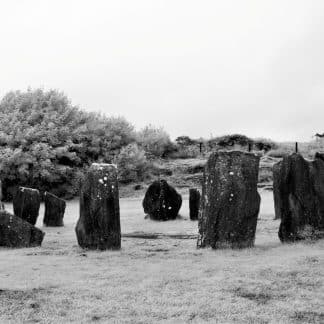
Drombeg Stone Circle, also known as the Druid’s Altar, stands as one of Ireland’s most intriguing megalithic sites. Located just 2.4 kilometers east of Glandore in County Cork, this ancient monument draws visitors from around the world.
Initially, you might notice its modest size compared to other stone circles. Nevertheless, its historical significance and picturesque setting make it truly special.
Sacred Stones
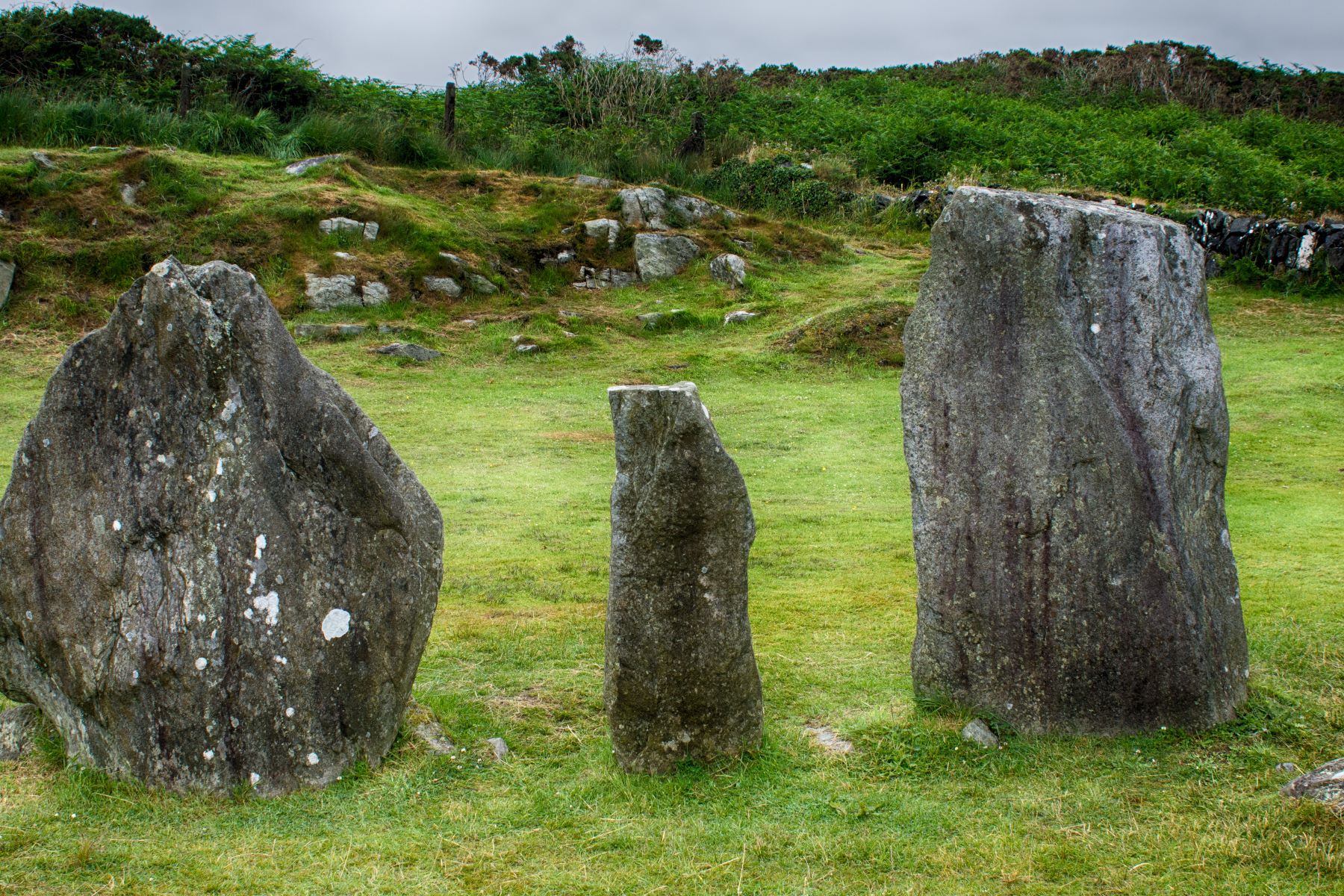
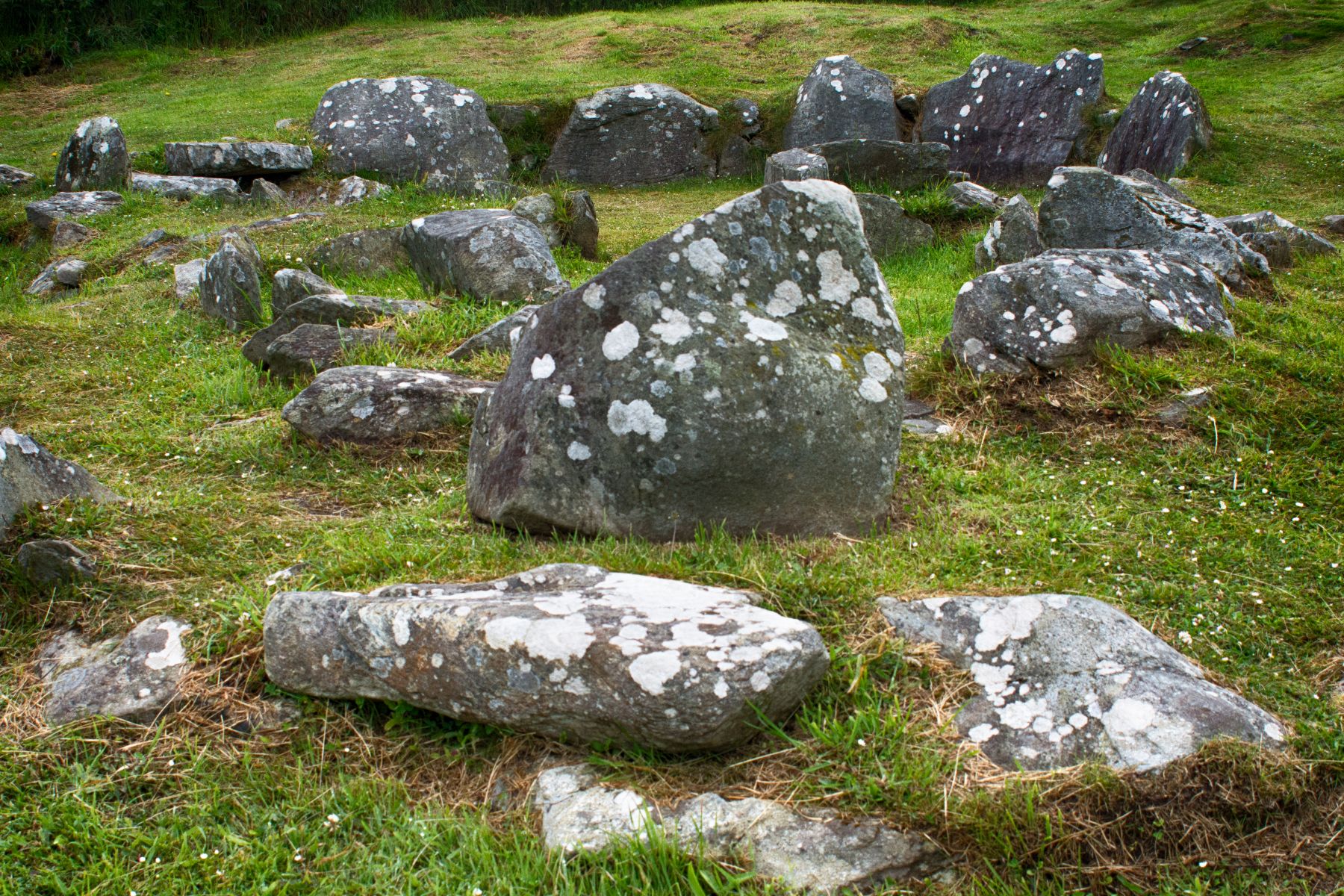
Firstly, the circle consists of seventeen closely spaced stones, although only thirteen remain standing today. These stones, crafted from local sandstone, form a nearly perfect circle with a diameter of 9.3 meters.
Interestingly, the circle’s axis aligns with the setting sun during the midwinter solstice. This creates a captivating spectacle for those fortunate enough to witness it.
Portal Stones
Moreover, the site features two taller entrance stones, known as portal stones, which stand opposite a recumbent axial stone. This arrangement not only marks the entrance but also enhances the site’s ceremonial ambiance. During excavations in 1958, archaeologists discovered the cremated remains of an adolescent in a pot at the circle’s center. This suggests the site’s use for ritualistic purposes.
Prehistoric huts
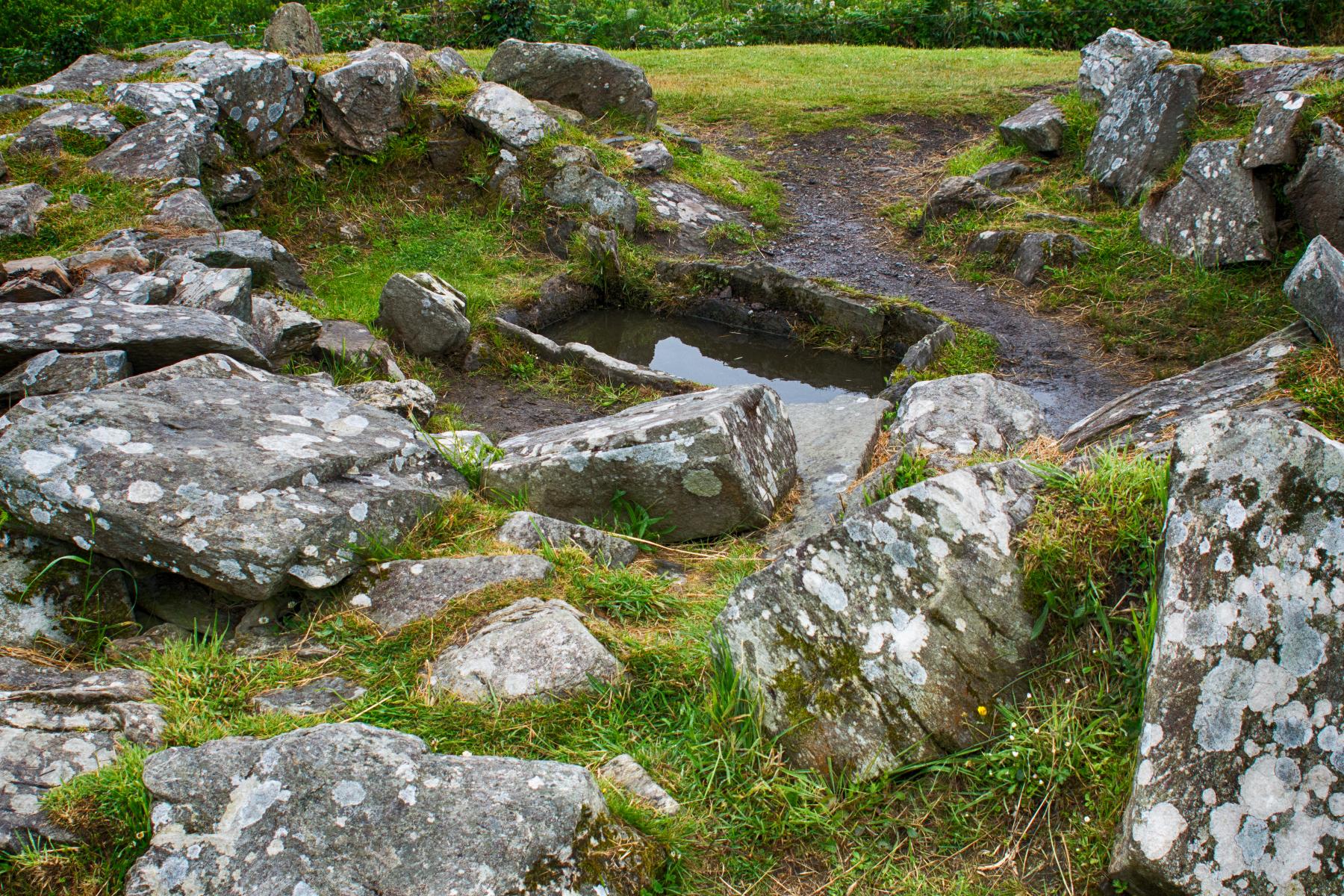
Transitioning to the surrounding area, you will find two prehistoric huts and a fulacht fiadh. The fulacht fiadh is located approximately 40 meters west of the stone circle.
The larger hut once had a timber roof supported by wooden posts, while the smaller hut contained a cooking spot. A causeway connects these huts to the fulacht fiadh, which includes a hearth, well, and water trough.
This setup indicates that the site was not only a place of ritual but also a hub of daily activity until around the 5th century AD.
Bronze Age
Additionally, the site’s name, Drombeg, translates to “small ridge,” aptly describing its location on a rocky terrace. It also comes with stunning countryside and sea views.
Radiocarbon dating suggests that the stone circle was in active use between 1100 and 800 BC, placing it firmly in the Bronze Age.
Despite its age, the site remains remarkably well-preserved, offering a tangible connection to Ireland’s ancient past.
Conclusion
In conclusion, Drombeg Stone Circle captivates visitors with its blend of historical significance, architectural ingenuity, and natural beauty.
Whether you’re drawn by its archaeological importance or simply its serene setting, this site offers a unique glimpse into the lives and rituals of Ireland’s early inhabitants.
So, when you visit, take a moment to appreciate not just the stones themselves, but the rich tapestry of history they represent.
Showing all 6 results
-
Ireland Black and White Prints
$350.00 (price_excluding_tax) Select options This product has multiple variants. The options may be chosen on the product page -
Ireland BW Canvas Prints
$229.00 (price_excluding_tax) Select options This product has multiple variants. The options may be chosen on the product page -

Ireland BW Framed Prints
$550.00 (price_excluding_tax) Select options This product has multiple variants. The options may be chosen on the product page -

Ireland SW Canvas Photography
$229.00 (price_excluding_tax) Select options This product has multiple variants. The options may be chosen on the product page -
Ireland SW Color Photography
$350.00 (price_excluding_tax) Select options This product has multiple variants. The options may be chosen on the product page -

Ireland SW Framed Photography
$550.00 (price_excluding_tax) Select options This product has multiple variants. The options may be chosen on the product page


Showing all 6 results