Athens, Greece
Athens, Greece
Fine Art Photography by Jacqueline LaRocca


Early Origins
Athens began as a small Mycenaean settlement around 1700 BCE. Soon afterward, the city grew because its hills offered protection.
According to myth, Athena won the city by gifting the olive tree. Consequently, the Athenians honored her as their patron.
Archaic Growth
During the Archaic era, Athens expanded its influence. Meanwhile, trade increased wealth and encouraged cultural change. At the same time, reforms by Solon reduced social tensions. As a result, more citizens gained political rights.
Classical Golden Age
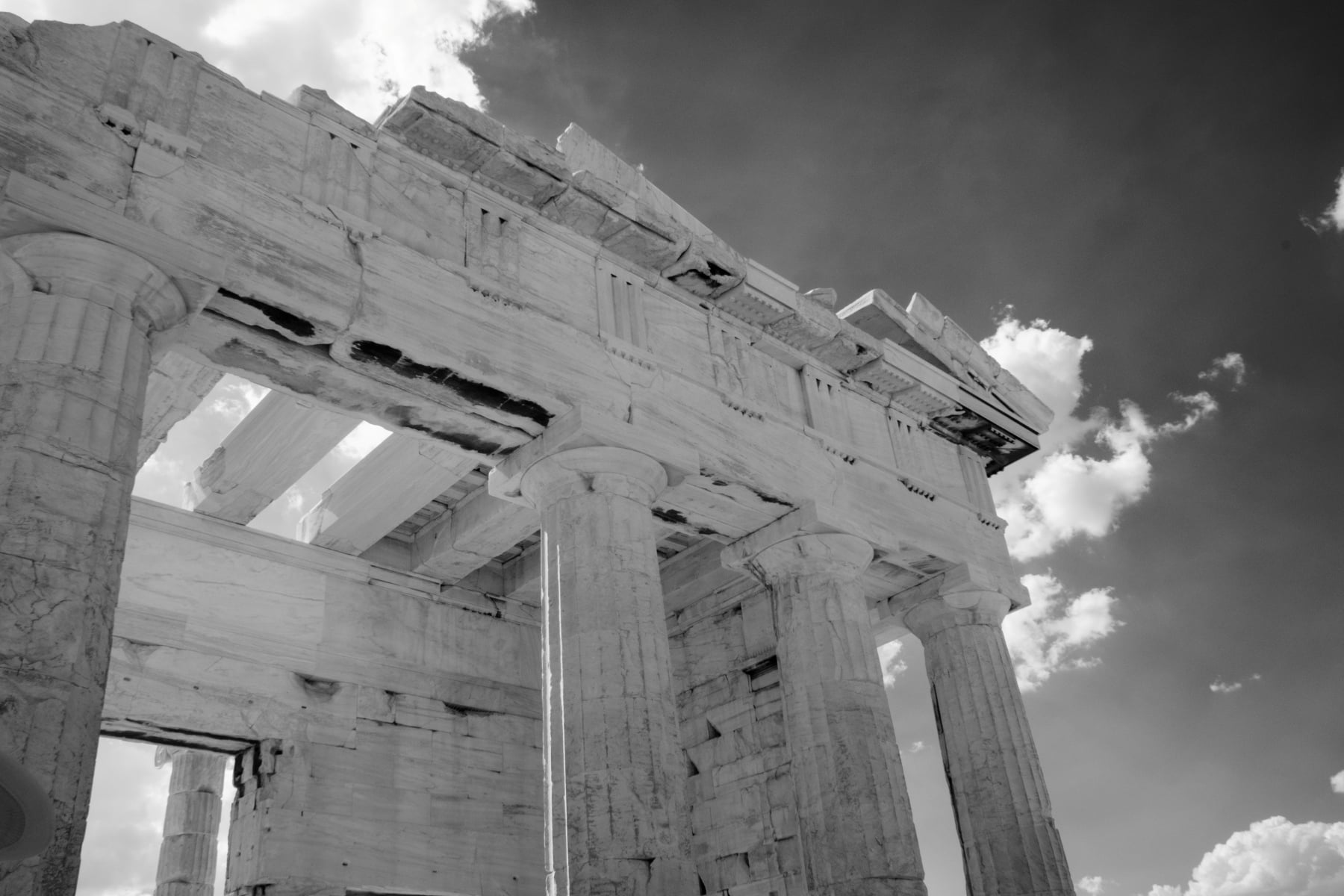
In the 5th century BCE, Athens reached its peak. After the Persian invasion, Pericles rebuilt the Acropolis. Consequently, monumental temples reshaped the skyline. Democracy strengthened civic participation. Furthermore, drama, philosophy, and art flourished. Then Athens led the Delian League and dominated the Aegean.
Conflict and Decline
Eventually, rivalry with Sparta sparked the Peloponnesian War. After years of fighting, Athens lost the war. Therefore, its dominance faded.
Later, Macedon absorbed the weakened city.
Hellenistic and Roman Eras
Under Hellenistic rule, Athens remained a cultural center. Soon, new schools attracted students from across the Mediterranean. Then Rome conquered the city in 86 BCE. Nevertheless, Roman leaders admired Athens and supported its institutions.
Byzantine and Medieval Periods
Christianity spread, and pagan schools declined. Afterward, Athens became a provincial Byzantine town. Later, Frankish and then Ottoman forces controlled the city. Consequently, its population and influence shrank.
Modern Revival
Greece won independence in the 1820s. Soon after, Athens became the national capital in 1834. From then on, the city expanded rapidly.
Moreover, new neighborhoods transformed its urban life.
Showing all 3 results
-

Greece Black and White Prints
$350.00 (price_excluding_tax) Select options This product has multiple variants. The options may be chosen on the product page -
Greece Canvas Art Prints
$229.00 (price_excluding_tax) Select options This product has multiple variants. The options may be chosen on the product page -

Greece Framed Art Prints
$550.00 (price_excluding_tax) Select options This product has multiple variants. The options may be chosen on the product page
Showing all 3 results